Doctoral Student’s Research Helps Crack the Code on Nonverbal Communication
Brittany Vincente, alumna and current graduate student in DU’s Mind and Body Lab, dives deep into the nonverbal cues we send and what they reveal about emotion, status, and threat.

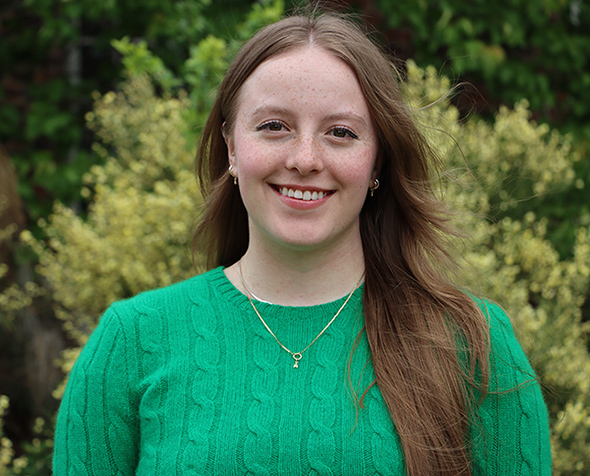
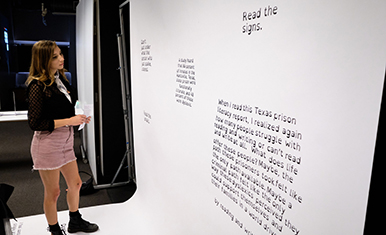
Graduate Student Brittany Vincente. Photo by Hannah Fulk.
Studying martial arts as a child sparked Brittany Vincente’s lifelong passion for unlocking the secrets to the nonverbal cues humans send when engaging with others as friends and foes.
Her fascination led her to earn a Bachelor of Arts degree in psychology from the University of Denver’s College of Arts, Humanities & Social Sciences (CAHSS), where she first began researching the subject in the Department of Psychology. Post-graduation in 2013, she joined a consulting firm studying motivational psychology. “A lot of what I worked on there was applying motivational principles in the virtual world to testing video games with users,” she said.
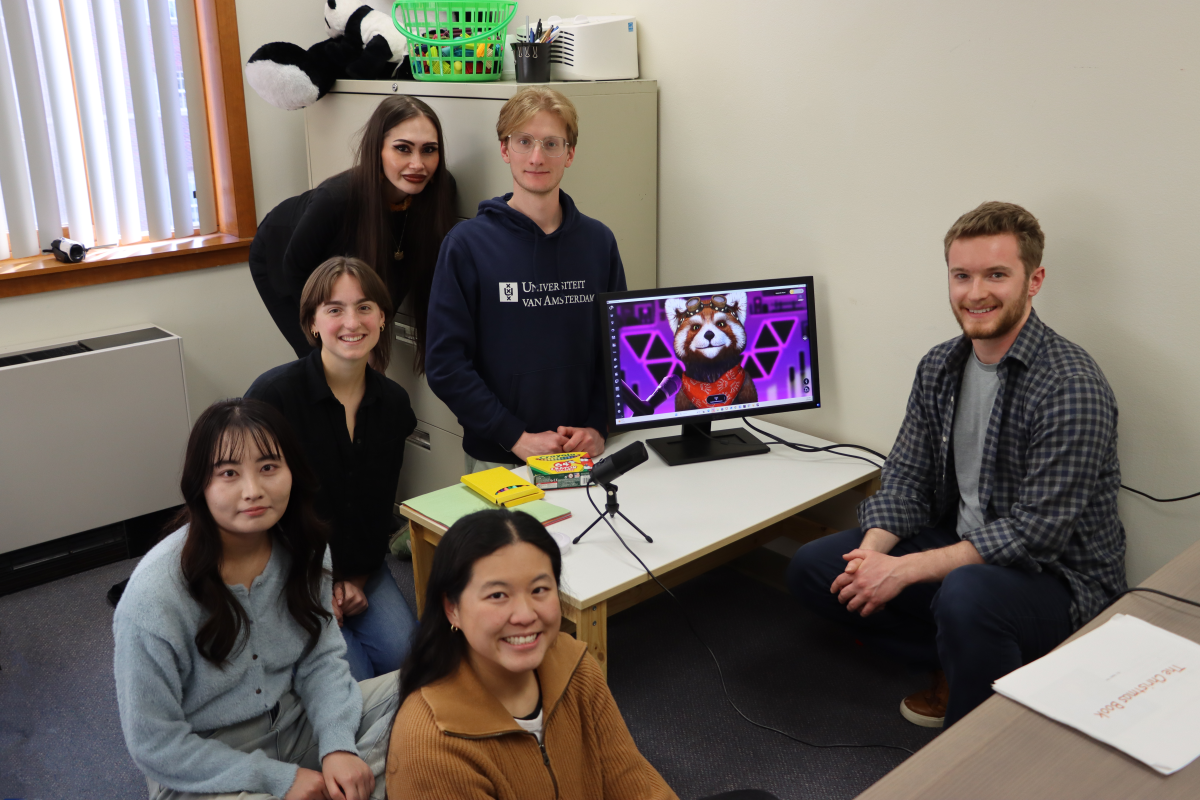
Vincente gained valuable expertise in survey methodology and statistical design but eventually longed to uncover new insights into nonverbal communication and the power of mindfulness and meditation. In 2024, she returned to DU and enrolled in a PhD program. She joined the research team in the Mind and Body Lab, led by Professor Danny McIntosh, focused on studying decision-making, nonverbal communication, and mindfulness and meditation, and resumed her original nonverbal communication research.
“Previous research had shown that people rely on context when interpreting facial expressions, “ Vincente said. “How you read other people’s emotions differs when you’re walking into a work event versus walking alone down the street at night, for example.”
She wanted to find out more about how “both context and goals inform our perception of emotion, and which body signals people rely on most to make nonverbal judgments.”
In the three-part study she initiated called “Judging Others’ Emotions,” volunteer research participants looked at photos demonstrating three distinct aspects of nonverbal communication: anger versus fear face, expanded body versus contracted body postures, and forward versus back-leaning body positions.
“In the first study, we paired these pictures with emotion-based words like ‘fear’ and ‘scared,’ threat-based words like ‘attacker’ and ‘victim,’ and social-status-based words like ‘leader’ versus ‘follower,’ and asked people to judge whether the photo matched the word,” Vincente explained. In a second study with facial information removed, participants were asked to judge based only on the other two body channels. “When we removed the facial information, the posture became especially important for all three judgments,” Vincente said.
Published results showed that people rely on different nonverbal cues when making emotion judgments, using facial expressions and body lean but not expansion or contraction. However, when judging threat, people use all body channels to assess danger, and when judging status, they rely on facial information and body expansion but not body lean.
Vincente and research team members are currently analyzing the information collected in a third study that also focused solely on photos of posture and lean. In that study, instead of asking participants for a yes/no judgment, they asked them to rate on a scale how much they thought the word matched the pictures.
“The key takeaways from these studies so far show that people use different nonverbal channels to interpret bodily communication when they have different goals,” Vincente said.
She hopes this research will help people become more skilled at reading nonverbal cues and more aware of the messages we all send nonverbally. “That can contribute to building our emotional intelligence and improving the interpersonal skills we use to navigate the world,” she added.
Continuing research on judging emotions through nonverbal communication can also inform the understanding of bias and discrimination and how identity characteristics might interact with nonverbal judgments. In the long term, the lab’s work has applications not only for learning more about how humans interact with other humans but also about how we engage with AI and robotics.

Discover What Drives Human Behavior
Explore the psychology research labs and studies open to student researchers in our college.