More Than a College: How CAHSS Is Preparing Students for What's Next
Our students build real-world skills that go far beyond the classroom.
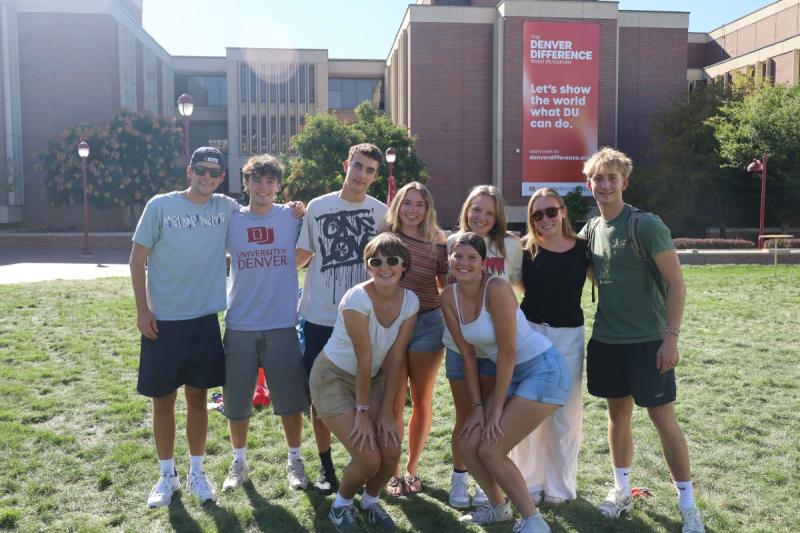
CAHSS students at the 2026 College Welcome Event. Photo by Cindy Garcia-Magaña.
Employers have redefined what skills they seek in new employees, and the new definition sounds a lot like what the College of Arts, Humanities & Social Sciences (CAHSS) at the University of Denver (DU) has been building all along: empathy, communication, leadership, curiosity, and creativity. These are the traits that make us human. They are also the traits that make us irreplaceable in the workforce.
As artificial intelligence alters the way society handles routine and technical tasks, employers are now looking for what AI cannot replicate: the capacity to think critically, communicate clearly, work across teams, and make sound judgment calls under pressure. Often filed under durable skills, these are the abilities that hold everything else together, and no amount of technical proficiency makes up for their absence.
The Skills Employers Want
The numbers make this case on their own. According to Washington Monthly, nearly 90% of employers surveyed said they look for evidence of problem-solving ability, and roughly 8 in 10 employers value strong teamwork and written communication.
At CAHSS, creative problem-solving and intellectual integrity aren't add-ons. They are built into the coursework of every discipline. Every student who passes through this College leaves more adaptable, more hirable, and more essential to the workforce they enter.
"CAHSS courses give you a different perspective that allows you to understand communication more deeply," said Emerson Fox, a recent CAHSS graduate.
The Unexpected Skills That Emerge
One word comes up repeatedly when people describe CAHSS graduates: versatility. A liberal arts degree doesn't lock a student into a single career path. It instead opens the door to exploration in academia and beyond. Well-educated graduates often move into fields far from their major, and that isn't a liability. That's the whole point.
For example, theatre alumna, Katy Williams, has made a name for herself in the creative and performance industry in Colorado as a pioneer in the world of puppetry. Williams continually employs skills she learned in the DU theatre program, such as design, carpentry, performance and entrepreneurship for her artistry, to pursue her dreams and become successful in her niche, full-time career.
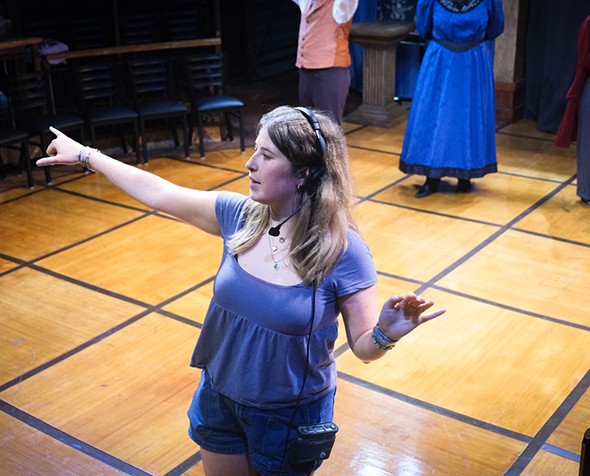
Furthermore, workplace collaboration depends on more than just words. Students in the Lamont School of Music & Theatre spend four years developing exactly the instincts most teams need in every professional setting: improvisation, presence, and the ability to read a room and overcome difficult challenges in a short period of time.
Annie Mulvihill, a recent theatre graduate, served as a professional stage and production manager at the New Swan Shakespeare Festival during her time as an undergraduate student, a role usually reserved for graduate students or professionals. Because of the skills Mulvihill developed through earning her liberal arts degree at DU, such as leadership, crisis management, and interpersonal communication, she was able to not only maintain this position and her full course load, but also impress and connect with industry professionals before graduation, providing a launchpad for her career.
CAHSS students, who are trained in close reading, critical thinking, and interpretation, become indispensable as they work alongside programmers and engineers in the years ahead. According to Forbes, graduates in history, literature, and philosophy are trained to be comfortable and even thrive alongside ambiguity and contested meaning, to spot bias, contradiction, and narrative gaps that others miss.
When workplace conflict arises, who is better equipped to navigate it than a sociology or psychology graduate? When a company needs to win over a client, who communicates that vision better than a journalism or communications major?
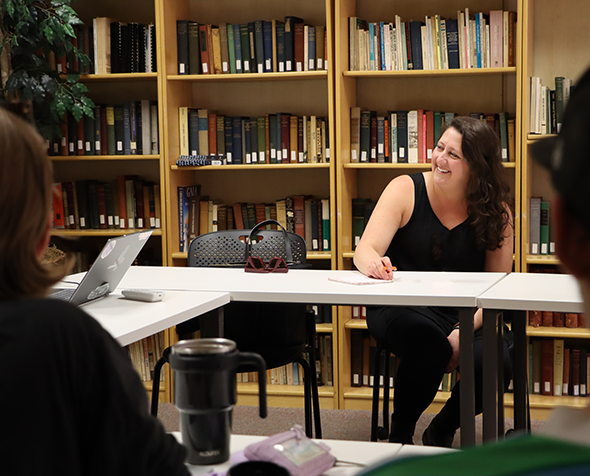
Communications Professor, Beth Suter, notes that her classes extend theory beyond the classroom through courses in collaboration, negotiation, argumentation, and public speaking. In one of Suter's courses, "Family Communication," students learn about conflict management, power, family norms, and culture, which are all beneficial tools in the workplace and outside of it.
Liberal arts and humanities majors do more than adapt to the workplace of the future. They build bridges between innovation and what it means to be human.
The Future For Liberal Arts Grads
Liberal arts students are trained to create what technology cannot, but that doesn't mean rejecting technology entirely. It means knowing how to ethically work with it. The graduates who can hold that balance are the ones employers want most.
Associate Dean for Student Success, Paula Adamo, said, "CAHSS teaches students how to learn, adapt, and critically engage with and apply new technologies. What you cannot learn quickly is how to think critically and embrace new perspectives, both of which our students learn here."
Deloitte's 2025 Global Gen Z and Millennial Survey found that younger generations increasingly prioritize durable skills, such as empathy, leadership, and adaptability, over technical skills alone in an AI-driven workplace. By 2030, demand for social and emotional skills in the U.S. is projected to rise 14%, as employers seek people who can think critically and bring a human touch to complex problems (CCDaily).
Even the biggest names in tech agree that technical expertise alone isn't enough. Apple recruits arts and humanities graduates because building products people actually want requires empathy and cultural fluency. Microsoft has embedded ethicists and humanists in its AI teams to test for fairness and cultural sensitivity. Google employs philosophers, linguists, and sociologists to grapple with algorithmic bias and inclusivity (CCDaily).
This is more than a passing trend. The top companies shaping the future are actively recruiting the exact skill sets CAHSS has spent decades cultivating in its students.
"Education should teach you how to tackle difficult situations. Quality education, like we have in CAHSS, is built for long-term success," Adamo said. "Our integrated 4D Fridays initiative shows students that while you need to work hard for your future career, there are lots of opportunities for you to employ skills and ambitions immediately, even if you're still taking classes."
Versatile and Prepared
The world has shifted, professionally and socially, more in the last decade than in the several decades before it. At CAHSS, we are not only adjusting to that shift; we are helping to shape it.
What you build here is more than a transcript or a diploma. It's the capacity to think, connect, question, and lead in any field, under any conditions, regardless of what technology does next. These are the traits that make us human, and they are exactly what employers need now and will need even more tomorrow.
The liberal arts and humanities have shaped the world for centuries. With a CAHSS education, you won't just study that legacy. You'll become an extension of it.
"We are in a moment of profound transformation, and in moments like this, technology can show you what's possible, but it can't show you what matters," said CAHSS Dean Sahara Byrne. "That's what a CAHSS education gives our students: the clarity to ask the right questions and the grounding to act on the answers."

Ready for What's Next?
The workforce landscape has shifted, and CAHSS graduates are answering the call.