2026 HEAR Act Update
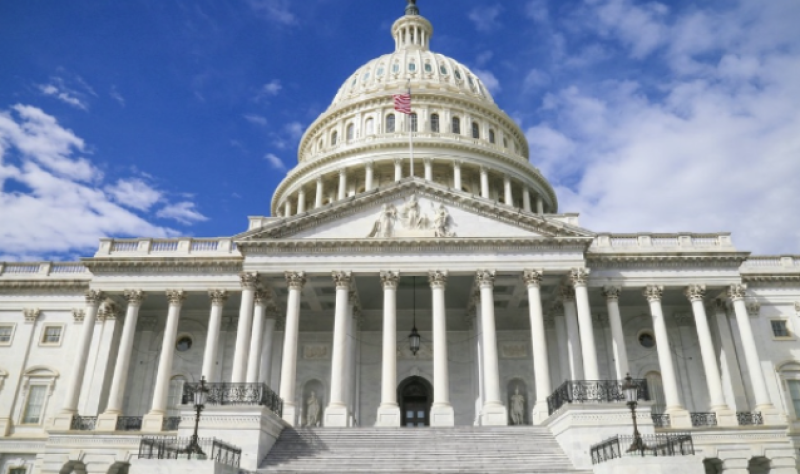
Courtesy of the New York Times
The recent expansion of the Holocaust Expropriated Art Recovery (HEAR) Act marks one of the most significant developments in Nazi-era restitution law since the original legislation was passed in 2016. Signed into law in April 2026, the updated act permanently extends and strengthens protections for Holocaust survivors and their heirs seeking the return of Nazi-looted art and cultural property.
Originally enacted unanimously in 2016, the HEAR Act was designed to address a major obstacle in restitution cases: statutes of limitations. For decades, museums, governments, and collectors frequently relied on procedural deadlines to dismiss claims before courts could even examine the historical evidence. The 2016 legislation created a federal six-year statute of limitations that begins only once claimants discover both the location of an artwork and their legal interest in it. The goal was clear: Holocaust-era restitution claims should be decided on their merits rather than dismissed through technical legal defenses.
However, the original act included a sunset clause that would have caused it to expire at the end of 2026. Over the last decade, restitution advocates increasingly argued that the law had not gone far enough. Courts continued dismissing claims through alternative procedural doctrines such as laches, an equitable defense that argues a claimant waited too long to bring a case. In practice, this meant that even when families could prove Nazi-era theft, cases were still being blocked before full hearings occurred.
The revised HEAR Act of 2025, passed with unanimous support in both houses of Congress, addresses these issues directly. Most notably, the legislation permanently removes the expiration date and explicitly limits the use of defenses such as laches that had been used to defeat restitution claims. Supporters argue that these changes restore the original intent of the 2016 legislation by ensuring that courts evaluate claims based on historical evidence rather than procedural barriers.
The law arrives amid renewed public attention to unresolved Nazi-era claims. More than 100,000 artworks looted during the Holocaust are still believed to remain unrecovered worldwide. Recent high-profile disputes—including the Herzog collection in Hungary and continued claims against major museums—have highlighted the persistence of unresolved restitution issues more than eighty years after World War II.
Advocates for the legislation framed the update as both a legal and moral necessity. Bipartisan supporters repeatedly emphasized that Holocaust survivors and heirs should not lose access to justice because of procedural technicalities or arbitrary deadlines. Senator Richard Blumenthal (D-CT) stated that the law helps ensure claims are “evaluated on their merits,” while Representative Laurel Lee (R-FL) argued that recent court interpretations had undermined Congress’s original intent. Organizations such as the World Jewish Restitution Organization also welcomed the legislation, describing it as an important step toward accountability for institutions currently holding Nazi-looted cultural property. Not all stakeholders supported the amendment, however. Museum organizations including the Association of Art Museum Directors (AAMD) and institutions such as the Metropolitan Museum of Art reportedly lobbied against the extension, arguing that indefinite litigation could create uncertainty for museums and collectors and complicate the resolution of longstanding ownership disputes.
For museums and collecting institutions, the updated HEAR Act may significantly reshape the restitution landscape. Legal experts note that the revised legislation broadens opportunities for heirs to bring claims while increasing pressure on museums to conduct deeper provenance research and proactively address problematic ownership histories. The law also reflects a broader shift in museum ethics over the past decade, in which provenance research has become increasingly central to institutional accountability and public trust.
The revised HEAR Act demonstrates that restitution is no longer viewed solely as a historical issue tied to the immediate aftermath of World War II. Instead, it remains an active and evolving area of museum ethics, legal reform, and cultural policy. By extending and strengthening the legislation, Congress acknowledged that the work of Holocaust-era restitution is far from complete—and that the passage of time should not foreclose the pursuit of justice.
Bibliography:
“2025 HEAR Act Is Now Law | Thompson Hine LLP.” Thompson Hine LLP, 17 Apr. 2026, www.thompsonhine.com/insights/2025-hear-act-is-now-law/. Accessed 27 May 2026.
“Blumenthal-Led Bill to Aid Recovery of Nazi-Confiscated Art Passes House Unanimously | U.S. Senator Richard Blumenthal of Connecticut.” Senate.gov, Richard Blumenthal, 18 Mar. 2026, www.blumenthal.senate.gov/newsroom/press/release/blumenthal-led-bill-to-aid-recovery-of-nazi-confiscated-art-passes-house-unanimously? Accessed 27 May 2026.
“Cornyn, Colleagues’ Bill to Aid Recovery of Nazi-Confiscated Art Signed into Law - Senator Cornyn.” Senator Cornyn, 14 Apr. 2026, www.cornyn.senate.gov/news/cornyn-colleagues-bill-to-aid-recovery-of-nazi-confiscated-art-signed-into-law/.
Culhane, Mallory. “Heirs to Nazi Stolen Art Fail to Revive Suit against Hungary.” Bloomberg Law, 23 Jan. 2026, news.bloomberglaw.com/us-law-week/heirs-to-nazi-stolen-art-fail-to-revive-suit-against-hungary. Accessed 27 May 2026.
Lazerow, Herbert I. 2018. "Holocaust Art Disputes: The Holocaust Expropriated Art Recovery Act of 2016." The International Lawyer 51 (2): 195-258. https://du.idm.oclc.org/login?url=https://www.proquest.com/scholarly-journals/holocaust-art-disputes-expropriated-recovery-act/docview/2115658545/se-2.
Lufkin, Martha. “US Congress Passes Revamped Holocaust Recovery Bill That Sidesteps Many Legal Defences.” The Art Newspaper - International Art News and Events, 17 Mar. 2026, www.theartnewspaper.com/2026/03/17/us-congress-passes-hear-act-2026-holocaust-era-art-recovery-nazi-loot. Accessed 27 May 2026.
Tarter, Krinsky, and Drogin LLP. “The 2025 HEAR Act Signed into Law | JD Supra.” JD Supra, 2025, www.jdsupra.com/legalnews/the-2025-hear-act-signed-into-law-7037926/. Accessed 13 May 2026.
“The Revised HEAR Act: Expanded Opportunities for Owners and Heirs to Recover Nazi-Looted Art - Law Offices of Snell & Wilmer.” Law Offices of Snell & Wilmer, 24 Apr. 2026, www.swlaw.com/publication/the-revised-hear-act-expanded-opportunities-for-owners-and-heirs-to-recover-nazi-looted-art/.