The College Myth That's Stressing You Out (And Why We Don't Buy It)
We're answering your frequently asked questions from a student POV about why Denver, why DU, and why CAHSS.
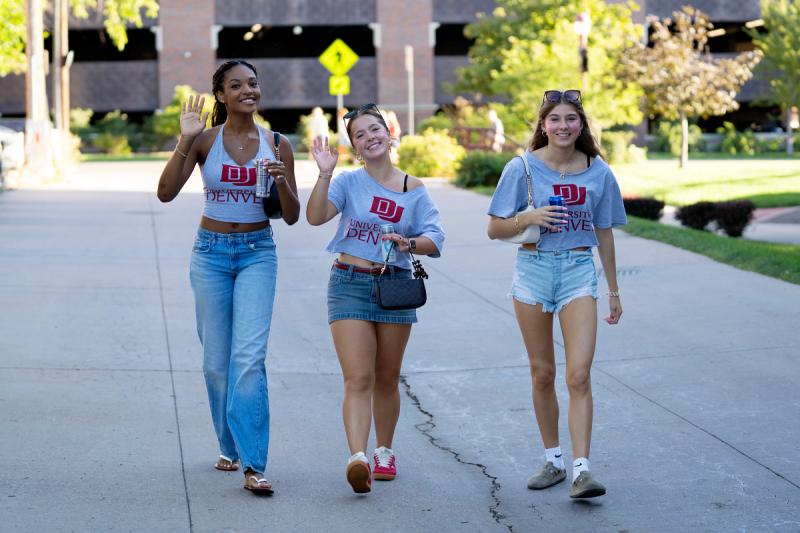
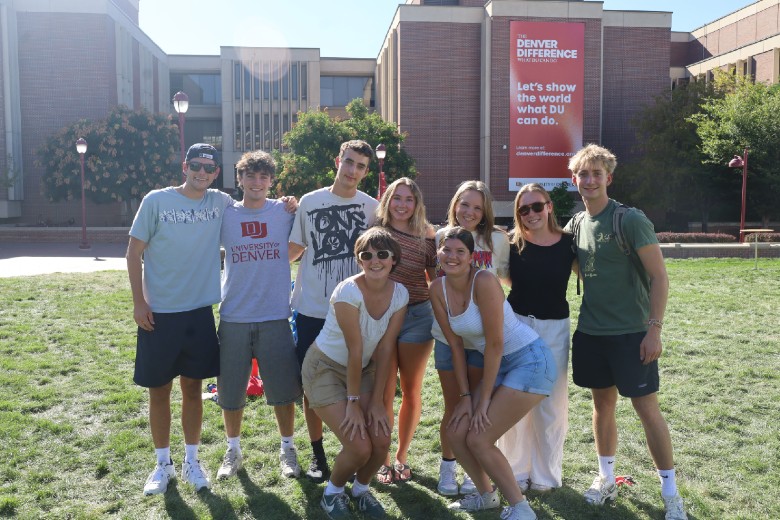
Class of 2030 students walking to orientation together. Photo by University Relations.
When you’re deciding where to go for college, it can feel like your whole life is rushing at you. There are deadlines to meet, decisions to make, and big changes that suddenly seem like they'll determine the rest of your life. You're asked to choose a school, a major, and sometimes even a career path before you've had the chance to fully discover what excites you. But what if college wasn't about narrowing your interests as quickly as possible? What if it was about exploring them?
If you've ever thought, "I'd love to study politics and psychology" or "I don't want to give up on becoming an artist just because I also want to study economics," you're not alone. One of the biggest misconceptions about attending a university is that you have to choose just one path. At the University of Denver (DU), academic programs offered in the College of Arts, Humanities & Social Sciences (CAHSS) reject that rigid structure and instead center exploration and interdisciplinary learning as the core tenet in every classroom. Being a student in CAHSS means experiencing the flexibility in your coursework to pursue diverse subject matter in liberal arts, humanities, and social sciences without sacrificing another academic interest. Especially with the help of DU’s quarter system, it’s more accessible than ever to combine majors, minors, and new opportunities as a CAHSS student.

Why Denver
-
Why should I choose Denver over another college town?
Choosing DU means choosing a place where your growth extends beyond the classroom. Unlike many college towns, the Mile High City gives you access to Fortune 500 companies, professional sports, an international airport, and a growing start-up community, all while being less than an hour's drive to the Rocky Mountains. This means you can visit one of Colorado’s 30+ ski resorts on a Saturday morning and be back for dinner with friends downtown and an evening Rockies game. It’s a place where career opportunities, city life, and world-class outdoor adventure exist side-by-side, becoming part of your everyday college experience at DU.
-
Will I have access to internships in Denver?
At DU, internships aren’t just encouraged; they are woven into the student experience. Students have access to the state capital, diverse nonprofits and start-up companies, major corporations, and cultural institutions throughout the city, alongside professors with professional connections across Colorado. Through DU's Career and Professional Development services like the Summer Internship Award Program, students can even receive funding to pursue unpaid internships, and 4D Fridays on campus are reserved for preparing for your future career, making meaningful opportunities more accessible.
-
How can I get around without a car? What’s nearby?
Getting around Denver is easier than you might think, even without a car. Every DU student receives a free RTD pass, giving you access to buses and light rail across the city to explore downtown, reach internships, restaurants, and even weekend adventures. Surrounding campus is everything you might need: grocery stores, restaurants, coffee shops, parks, and outdoor spaces, all within walking distance.
-
What is there to do besides going to class?
College is about finding the people, places, and traditions that make campus feel like your home. At DU, this might begin with cheering on the Pioneers hockey team in Magness Arena, home to 11 NCAA National Championships and one of the country's top college hockey atmospheres. Campus traditions continue with Winter Carnival, when students head to the mountains for a weekend of skiing and snowboarding, and First Ascent, where every first-year student visits the James C. Kennedy Mountain Campus to explore the Colorado outdoors. DU is also home to more than 300 student organizations, making it easy to find your community, whether it’s through outdoor adventuring, cultural organizations, academic clubs, community service, or club sports.
Off campus, Denver is home to an immense network of thrift stores, local theater performances, and an underground music scene that will knock your socks off. The Denver community loves an opportunity to bring people together, whether it's a free yoga class, clothing swap or karaoke night, the city is your oyster, with DU's campus right in the middle of it.
-
What are some of the “must try” things in Denver?
Denver is a city full of experiences you’ll want to check off your college bucket list. One major perk is going to a concert at the Red Rocks Amphitheatre, conveniently located only 30 minutes from campus. DU students can also be spotted getting a hot dog at Ball Arena while they cheer on the Denver Nuggets, hiking through the Rocky Mountains, or attending the annual Western Stock Show. Denver’s food and fun scene is known for its green chili and breakfast burritos, cozy local coffee shops, fresh farmer’s markets, and buzzing dive bars, offering plenty of options to choose from throughout the city for a night-out on the town or a peaceful morning of exploring.

Why DU
-
Why should I double major?
One of the most wonderful things about college is getting to explore your interests and passions, so why limit yourself to just one major? Double majoring at DU allows you to build an education that reflects the full range of your interests, introducing you to more perspectives, faculty, classmates, and opportunities than pursuing a single subject. This broader experience can also strengthen your graduate school portfolios and job applications, while opening doors to careers you may not have discovered otherwise. At DU, pursuing multiple majors doesn't mean spending more time earning your degree.
-
Can I double major and minor at DU? Will I have time in 4 years?
35% of CAHSS students graduate with a double major, making it a common part of the DU experience instead of the exception. Every CAHSS student typically completes a second area of study, whether it’s a minor, second major, certificate, or approved program, and academic advisors work with you each quarter to build a plan that fits your goals. Combined with DU's quarter system, which allows you to take more classes each year than a traditional semester calendar, and opportunities on campus like accelerated 4+1 programs, you'll have the flexibility to customize your education without putting graduation on hold.
-
What if I have two completely different interests?
Some of the strongest ideas come from connecting subjects that don't seem related at first. At DU, you're encouraged to combine different ways of thinking, whether that's political science and data science, psychology and marketing, or music and business. Professors at DU often encourage you to take as many classes as possible pertaining to your own particular interests, and the unexpected connections you can make through this academic exploration can quickly become the experiences that shape your education and help you stand out in the job market after graduation.
-
What makes DU’s quarter system unique?
Instead of asking you to plan your entire future on day one, DU's quarter system gives you room to explore. Students complete three 10-week quarters each academic year, typically taking 12–18 credits with an optional summer quarter to catch up, stay on track, or get ahead. More quarters doesn’t mean more graduation requirements; it means more chances to re-invent yourself. There are more opportunities to explore different subjects, meet new professors and classmates, and add a second major or minor without feeling locked into one path.
-
Can I still study abroad and graduate on time?
For many DU students, studying abroad is one of the most meaningful parts of their student experience. In fact, 71% of 2023–2024 graduates studied abroad with more than 100 programs and partner universities around the world to choose from. Better yet, the cost of studying abroad at DU is the same as studying on campus, making global experiences more accessible while the flexibility of the quarter system helps students stay on track for graduation.
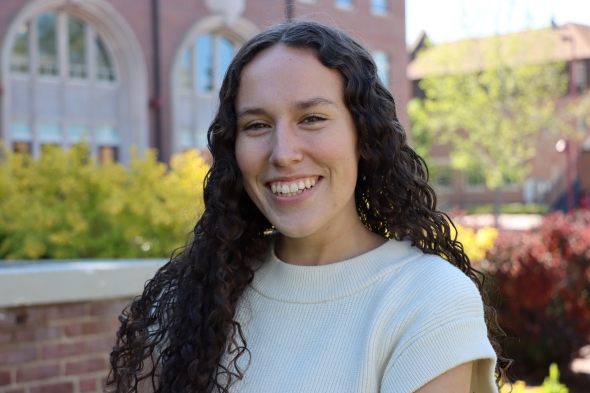
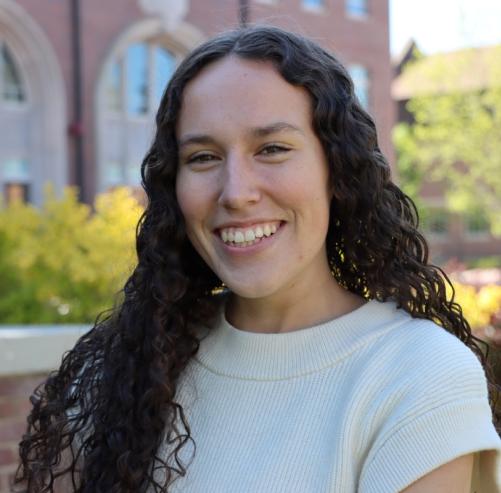
I studied in Germany for a quarter during my junior year, and I will spend my senior year in Sweden, all while completing my double-majors and double-minors in four years.
Kendal Hengst, political science student at DU

Why CAHSS
-
Why should I study the liberal arts and humanities?
Today's employers aren't only looking for technical expertise; they're looking for individuals who can think critically, communicate with confidence, understand people, and solve complex problems using various perspectives, all things taught in CAHSS. These are the skills that will remain valuable into the foreseeable future, no matter how technology and society change.
According to Forbes, social science and humanities graduates are proving especially resilient because their skills transfer across industries. Employers aren't just hiring for today's job descriptions; they're investing in people who can grow with what's next. Those people begin as students in CAHSS.
-
How does CAHSS encourage interdisciplinary learning?
In CAHSS, interdisciplinary learning is a part of your education from the very beginning. DU's Common Curriculum encourages every student to explore subjects beyond their major through First-Year Seminars (FSEM), Advanced Seminars (ASEM), Writing and Rhetoric, Language Study, and “Ways of Knowing” courses that challenge you to think critically across cultures, disciplines, and perspectives. Most of these courses are taught in the College of Arts, Humanities & Social Sciences, by faculty who specialize in teaching interdisciplinary subject matter, particularly how their fields intersect with other fields.
This instilled curiosity extends beyond the classroom, considering 73% of CAHSS students complete an internship before graduation, giving them the chance to apply what they've learned, discover how their interests intersect, and build a meaningful professional resume during their academic journey.
-
Will I have faculty mentorship/support?
Students in CAHSS have access to an array of experienced and enthusiastic professors who come from a range of professional and academic backgrounds. This support is essential to what makes students feel confident and prepared during their time at DU, considering the student-to-faculty ratio on campus is 11:1, and the average class size is 21 students. Smaller class sizes make it easier to build relationships with award-winning professors, many of whom are pioneers in their respective fields and can become mentors, research advisors, and connections for professional opportunities.
Students are also encouraged to meet with their academic advisor at least once every quarter to maintain a consistent relationship with someone who knows your goals, helps you explore options, and keeps you on track towards graduation.
-
How will CAHSS prepare me for my career?
In the College of Arts, Humanities & Social Sciences, classes typically meet Monday through Thursday so Fridays can be intentionally set aside for research, creative work, career exploration, and community engagement. This gives students dedicated time each week to engage in internships, volunteering, networking events, career workshops, employer visits, and alumni connections.
Many courses also include community-engaged learning, allowing students to work alongside local organizations in Denver and apply what they're learning through service, research, and real-world work. Every CAHSS student graduates with at least two résumé-ready professional experiences, and 88% of CAHSS graduates are employed or enrolled in graduate school within six months of graduation. In CAHSS, you spend 4 years practicing, not just preparing for your career.
-
What can I actually do with a CAHSS degree?
With nearly every DU undergraduate taking a liberal arts, humanities or social science course at some point during their four years, and one-third of our student population majoring in the college, it's fair to ask: what can I do with a liberal arts degree? The answer? Almost anything requiring you to understand people, solve problems, and lead others through change. Our alumni have built careers across law, government, media, performance, and the arts, to name a few. The value of a CAHSS degree isn't just that it leads to one destination; a CAHSS degree grants you the perspective, versatility, and confidence to build a career that evolves with your interests and the world around you.
Want to Explore More in CAHSS?

Undergraduate Programs
Our undergraduate programs are deep, broad, and multi-disciplinary, giving students the knowledge and skills necessary to flourish during and after college.

Graduate Programs
With over 30 advanced degree programs, CAHSS helps graduate students cultivate their knowledge while exploring issues at the cutting edge of their fields.