CAHSS 4D Fridays: Your Fridays, Your Future
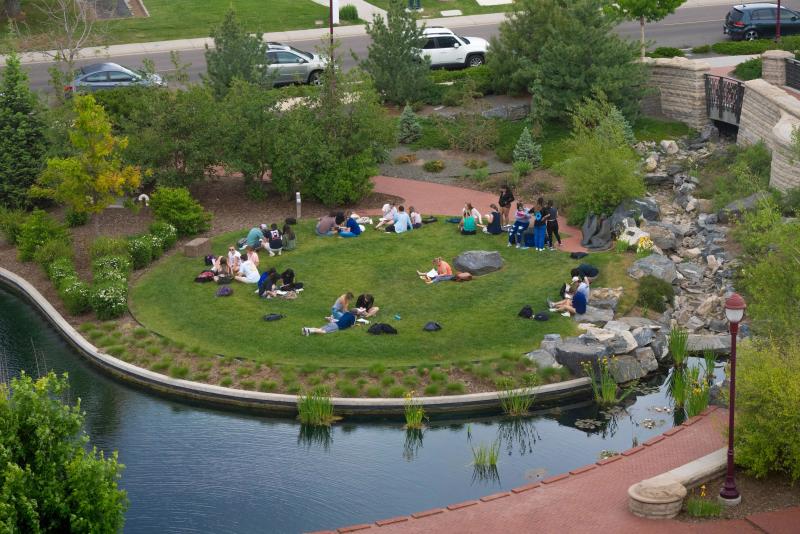
This spring, Fridays are becoming portals to your future. The College of Arts, Humanities & Social Sciences (CAHSS) continues to expand the University of Denver’s 4D Experience, integrating intellectual growth, character, well-being, and career readiness into every CAHSS degree. Faculty members are dedicating Fridays to the 4D student experience, beginning with courses that help students channel their passions into careers and lives of purpose.
Our emerging CAHSS 4D Fridays curriculum offers professional exploration, real-world experience, and for-credit classes and internships that prepare students to graduate as adaptive, skilled professionals ready to thrive in today’s evolving workplace.
ANTH 2002 "Anthropology Practicum: Projects-Based Learning, Anthropology,” Department of Anthropology, taught by Professor Bonnie Clark. Students work as part of a team assisting in the archeology lab, analyzing and assessing a collection of historic items excavated in Lafayette, Colorado, for long-term curation in a historic museum. Students learn to make sometimes difficult decisions about curation priorities and better understand field note and report writing. The class provides essential curation management skills students can add to their resumes, helping them build a professional profile for careers in anthropology in settings like historical societies and museums.
ENGL 2709–2 “Literary Careers and Communities,” Department of English & Literary Arts.” What role does literature play during times of social, civil, and political unrest? What purposes can literature serve today, and how might students continue to participate in the literary community after graduation? Speaking practically, how might students pursue careers in the literary world? In this two-credit practicum, students will discuss the role of literature in society while connecting with a range of writers and literary and publishing professionals. They will explore literary communities and resources at the University of Denver, in the Denver community, and across a national network of DU alumni.
FREN 1020 "French for the Workplace,” Center for World Languages & Cultures. Students who have successfully completed FREN 1002 or placed into FREN 1003 and are looking to pick up French language essentials that they can apply to any profession can register for this class. It offers core French language skills common to diverse business environments, enabling students to engage with the most universal professional communication situations found in today's workplace.
All students interested in U.S. veterans can enroll in HIST 2701, “Topics in History 4D: More Than a Headstone,” in the Department of History, taught by Associate Professor Elizabeth Escobedo and Professor Carol Helstosky. This course engages students in the University of Denver’s “Veterans Legacy Program,” a national educational initiative that offers students the opportunity to research the lives and legacies of veterans buried at Fort Logan National Cemetery in Denver, Colorado. Students learn to unearth, engage with, and analyze historical sources; conduct oral histories with living veterans and family members; connect veterans' lives to larger narratives of U.S. history; and share their findings with a public audience through the More than a Headstone project website. The class provides students with key skills to practice history in real-world settings and contribute to community-engaged historical practice.
Psychology majors and minors can enroll in the Department of Psychology's PSYCH 1700 "Careers in Psychology” course, which provides an overview of career options for students with a psychology degree. Taught by Teaching Professor Aimee Reichmann-Decker, the class connects students with campus professional development resources and offers practical skills, including resume writing, interview preparation, finding internships, and arranging informational interviews. It familiarizes students with the landscape of professional options available in psychology, helps them define their path clearly, and moves students toward their goals at their chosen pace.
RLGS 3900, 4900 “Careers of Purpose” Department of Religious Studies, taught by Professor Andrea Stanton. This professional development course for religious studies students blends academic insight with professional exploration. Students engage with religious studies alumni working in diverse fields, learn about and apply NACE (National Association of Colleges and Employers) career-readiness competencies in their courses and program of study, and complete reflective, creative exercises that help them translate their religious studies skills and knowledge into versatile career pathways.
All University of Denver students looking for a greater understanding of legal consciousness and legal process can enroll in Professor Lisa Pasko’s, Department of Sociology & Criminology and Department of Socio-Legal Studies SOCI 2613 “Research Practicum Experiential Learning, Understanding the Criminal Legal System.” This course extends students’ understanding of the criminal legal system to real-world settings — including arraignment, sentencing, probation/parole hearings, continuances, and bail hearings — enabling them to examine the overall roles and work of legal actors involved. Students conduct trial/courtroom observations online and in person to deepen their understanding of the courtroom experience and the impact of proceedings on the defendants and clients they witness.
“Internship in Spanish. SPAN 3997,” Department of Spanish Language, Literary and Cultural Studies is team-taught by Teaching Associate Professor Lina Reznicek-Parrado and Teaching Associate Professor Kathleen Guerra. This paid-for-credit internship places students in community settings, enabling them to use their Spanish language skills to engage with the world and support the needs of community partners. Students work in dozens of placements across the Denver metropolitan area, gaining real-world skills and experience for a variety of careers.
SPAN 1004“Spanish for Socio-Legal Professionals: Essential Communication Skills,” Center for World Languages & Cultures, Department of Spanish Language, Literary and Cultural Studies. Taught by Teaching Assistant Professor of Spanish Rocio Rubio Moiron, this course introduces students to the essentials of the Spanish language needed to work effectively in legal, social justice, international, and community-oriented professional settings. Through practical, real-world activities, students develop skills to describe their educational background and professional experience, discuss their immediate legal or community environment, communicate key legal and social information, and manage interactions in Spanish-speaking professional contexts with confidence, using clear, culturally sensitive language. Instruction emphasizes applied scenarios in law, policy, international studies, and community advocacy.
SPAN 2004 “Spanish for Socio-Legal Professionals: Expanding Communication Skills,” Department of Spanish Language, Literary and Cultural Studies. Building on SPAN 1004, this course expands students’ ability to use Spanish in legal, policy, and community advocacy contexts. Students develop greater confidence and complexity in socio-legal communication, including summarizing cases, conducting more detailed interviews, preparing community-facing explanations, and navigating culturally nuanced interactions through scenario-based tasks, such as mock intakes, policy briefings, case summaries, and community outreach dialogues.
SPAN 1008 “Spanish for Healthcare and Wellness Professionals: Essential Communication Skills,” Center for World Languages & Cultures, Department of Spanish Language, Literary and Cultural Studies. Taught by Teaching Professor of Spanish Sergio Macias, the course introduces students to the essential Spanish needed to communicate effectively in healthcare and wellness settings and emphasizes practical, real-world interactions with Spanish-speaking patients and clients. Students develop skills to communicate clearly, in a culturally sensitive, patient-centered way, by integrating language, culture, and basic clinical communication strategies. Instruction focuses on accessible, everyday communication that helps students understand patients’ perspectives and makes health information understandable and respectful.
SPAN 2008 “Spanish for Healthcare and Wellness Professionals: Expanding Communication Skills,” Department of Spanish Language, Literary and Cultural Studies. Building on SPAN 1008, this course strengthens students’ ability to conduct more sustained, accurate, and culturally mindful interactions with Spanish-speaking patients in real clinical settings, enabling them to engage in more detailed conversations, including patient interviews, wellness counseling, treatment explanations, and navigating culturally specific health beliefs. Students analyze authentic communication challenges, negotiate meaning in unfamiliar situations, and practice responding to patient concerns using empathetic, patient-centered Spanish.

Ready to Register?
Meet with your advisor about spring 4D Fridays classes.