Interview With English Professor Joanna Howard
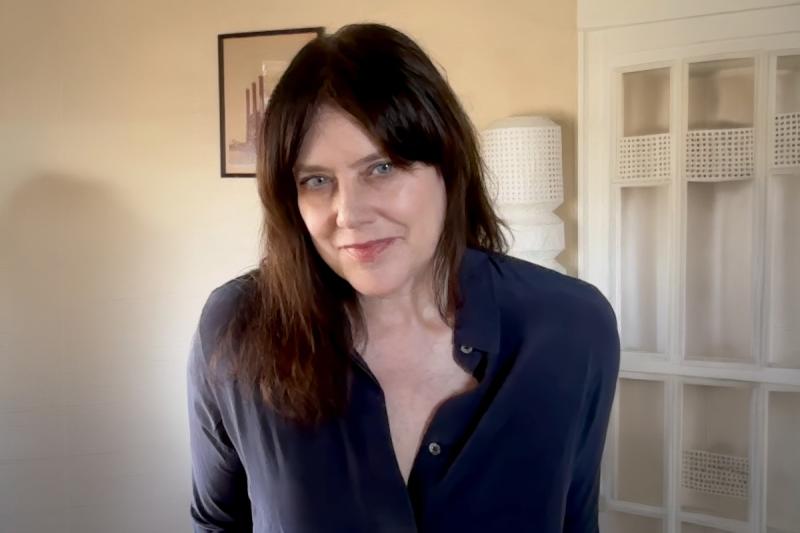
English Professor Joanna Howard. Courtesy Photo.
At a recent event, you mentioned that you'd been working on this book for 10 years. "Porthole" is interested in the behind-the-scenes of filmmaking - drawing on the mythologized stories of famous directors to situate its protagonist, director Helena Désir. How would you tell the behind-the-scenes of how this novel came into being?
The kernel was "Fitzcarraldo" and Werner Herzog. Herzog did a documentary called "My Best Friend," which was about everything that went wrong while filming "Fitzcarraldo." One of the things that goes wrong is the boat that they're filming on becomes unmoored. It wasn't terrible; it was quickly recovered. But that was what started me thinking about what would happen if it hadn't been quickly recovered: if someone had died on set, if the star had been killed.
When I was watching that documentary, I remember thinking that these were very irresponsible work practices. I got interested in the directors who had that recklessness as their agenda. Another director that I really love is Jean-Pierre Melville. He made French film noirs, which were super pulpy, but he was also part of the French New Wave, so he fell into an uncomfortable camp as a director wanting to make something that was pulpy, but also thinking of the work as intellectual and artsy.
Those two filmmakers were at the core of "Porthole" at the beginning. I started writing the accident on the boat. I didn't know who the narrator was going to be, but I realized that it was a woman, or I began to see her in my mind as a woman. I thought maybe she was a cameraman. When I’d decided that the narrator was a woman director, I just became obsessed with women directors, and how different their career trajectories had been from most of their male peers.
It's clear throughout that Helena's bad behavior is what often gets a pass, or even is celebrated, about auteur male directors: being uncompromising, controlling, having long and obscenely over-budget shoots. Is the idea that she got away with being exactly like one of those men?
Yes, absolutely, that's what I wanted to do. I knew that it was risky as a narrative idea, but I wanted to imagine a woman who can just occupy that space. Be a genius and not be punished for it. I have her saying through the book things like “I shouldn't exist,” “I don't exist,” “I'm not real.” That for me was a concession to my agent to explain away what seemed like an unrealistic, unbelievable plot premise, but was a fantasy I wanted to explore. Of the women filmmakers I was modeling, the central figure would be Agnes Varda, who was key for Helena’s backstory with Uncle Yiorgos. There were also Chantal Ackerman and Marguerite Duras. Those were the three key filmmakers. Catherine Breillat later, as I continued research.
I was thinking about what would be this fantasia of someone who was unapologetic in the role of male genius, and also a philanderer, yet be able to present a version of herself as ‘classically’ female. I had photographs of Djuna Barnes, Marlene Dietrich, and Claude Cahoon in my mind - these women who could morph between masculine presentations and Hollywood feminine glamour, but always with a toughness. That's kind of the project for me with that character. But she evolved, she softened over time, and she became different than I imagined.
There are multiple mediums evoked through the text. There's the novel itself and the films she's making. There's also an interest in memory, how we reconstruct them, what's missing, and what is recurrent for us. Then, there’s her refrain throughout the text: “Was I speaking?” It's constantly revealed that what readers interact with as a flashback is actually a monologue, which she's just dumped on whoever's standing nearby.
She has no idea she's doing that. In an essay you published with LitHub, you describe how your mom used to dramatically retell to you the stories of films, transforming them into monologues. I’d like to ask what all these forms - the oral monologue, the novel, the film, and memory - say to each other for you in collision through this text.
I come from a generation of writers that was all about intertextual connections. In fact, when I was revising the novel, one of my readers asked me, "What is this postmodernist bloat that the book is experiencing because of multiple forms?" I had to take a step back and think about that. Do I like all these overlapping forms just because I was trained in a particular style? Or is there something else going on?
I think what’s going on for Helena is that there's this blurred boundary between thinking and speaking, which I’m very fascinated by: extreme narcissists just can't stop their mind, so you're going to get every word of it. I think she falls into that narcissistic category in some ways, except that she's also incredibly perceptive of the people around her, because she's thinking about where she would place them in a kind of filmic space. I needed multiple forms of storytelling to think through that - in the same way that she ‘can’t exist’ as a female genius in the medium, she "can’t exist" as someone who can be so self-absorbed and simultaneously hyperaware of the details of others.
It's almost like she's failing spectacularly in every form. I read so many director biographies when I was working on the book, and I was often as fascinated by the failures of projects. The story of the story became really fun for me. How she would narrate a film that everyone else says is a complete success, which she calls "the fiasco war picture." Everyone agrees that's her best film, critically and presumably financially, and she just narrates it as a complete total disaster, in part because she lost control over what she wanted for it, or maybe never knew what she wanted for it.
Her process brings me to the question of collaboration. We are presented a series of her three “lovelies,” the muses (lead actors) who define eras in her filmmaking: Emile, David, then Corey. As a reader, I first latched onto Corey as the key figure, because he’s the one who just died for her art, sending her to the sanitarium for treatment. But her second actor, David, keeps coming back into the novel. He’s forced onto her "failed/greatest" film, that war picture with Corey, by the studio. He becomes a part of her treatment. I had the sense that where the other men were more classically muses for her, David is evolving into a collaborator, somewhat against her will. I'm interested in the tension built into "Porthole" by its engagement with an inherently collaborative, many-cooks-in-kitchen medium, via a filmmaker who is defined by her uber-controlling nature.
It's a delight to be able to talk about that aspect of the book. For me, once I figured out what her real problem was, which was that she wanted control over things that you can't have control over, it seemed to me like a bigger conversation, a bigger issue. There was a lot of back and forth between my agent and I about how to resolve the ending. I didn't want to make it a love story, and that would have been the more mainstream choice. I also didn't want her to grow in the sense of becoming moral about how unprofessional her practices were, because that felt to me like a capitulation: both for her, and for the book as a form. I didn't want to make it so easy to think: she's going to go back into making movies immediately. I wanted to leave some ambiguity there.
At a certain point in revision, I realized I had painted myself into a corner with Helena. That might be why David began to develop as a character in ways I didn’t know that he would. I began to realize that what made David so tenacious was that he just was unfussed. He was unflummoxed by her behavior, and his ego was not wounded - or if it was wounded, it didn't matter to him for long. He didn't care. I thought: In a way, this is a great partnership. I started thinking about that most important aspect of the collaboration - how people can open up and yield to someone else's vision - or in moments when that vision is deranged, not be personally wounded by it. That's when his character really blew up for me.
I also gave the book, maybe three, four years into the process, to a female filmmaker, a friend, Laura Colella, who I worked with at Brown. Laura read it and immediately emphasized this aspect of collaboration. She said that the hard thing is that boundaries are blurred in a set. You can get really confused, and you also don't know if you're responsible for something or someone else is responsible for it. Sometimes you don’t know what hierarchical relationships you’re in.
That was really helpful for me in thinking through how I might not be able to ‘heal’ Helena from her desire to be a philanderer or from her superficiality in her feelings, or her objectification of the men she worked with, but I could maybe heal her in her thinking about what would make a good film and whether or not collaboration could be a part of that, allow her to see, possibly, that other people’s ideas might have already been part of her filmmaking process. What I saw at the end of the book was that it was getting through to her that she could maybe work with someone again in the future, but she was not there yet, and it would take some time.
Those final pages are enigmatic.
No, no, I know. Within that final set of images, there are a couple of specific things for me. One is that I think of her career as beginning as a camera person, as a technician, and I wanted her to return to the space of the thing that sparked the original love of the medium. That, to me, was a clear way of saying she's going to go back to filmmaking. I wanted it to be that kind of technical immersion, this dissolving behind the lens. That also, to me, was a way of thinking about her as someone whose ego was dissolving at that moment in time.
That was what I was thinking by putting her in the little boat at the end and having her look at the islands. Sort of a metaphoric gesture - looking for an ideal image - which goes back to my training as a short story writer. But also, I think I might have been leaving myself a trail of breadcrumbs, leaving her open, so that I could return to her at some point. I just couldn't let go of this character. I honestly had such a hard time. I think that is the reason this book took me ten years. It was so hard for me to get into her mindset - she's not like me - that once I got in there, it was like vacation. She’s not a people pleaser, and she's so confident in her artistic vision. She's all the things that I was longing for.