Looking Back at Keston Sutherland's Reading and Q&A
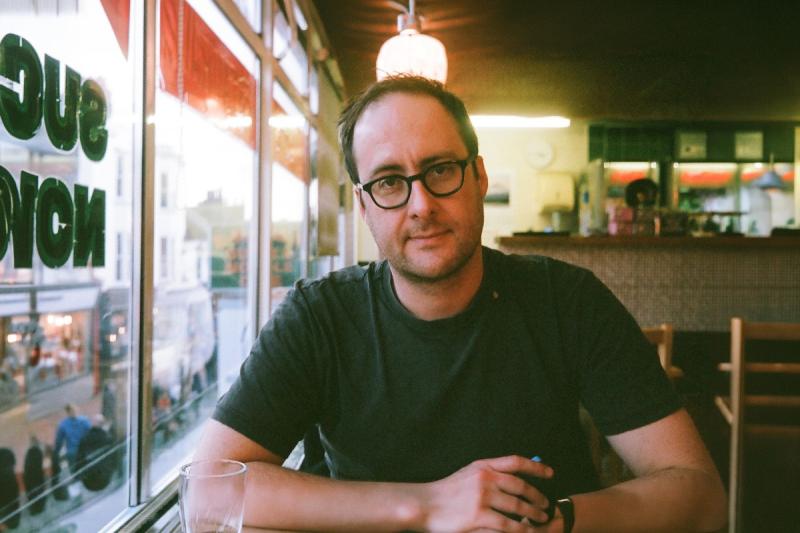
Keston Sutherland. Courtesy photo.
On June 4, 2026, the University of Denver's English department hosted its highly anticipated guest, Keston Sutherland, for a reading and Q&A. Keston Sutherland is professor of poetics at the University of Sussex and, as described by Professor Jennifer Soong, a vital force in generating international poetic community. Keston Sutherland is the author of numerous books of poetry, including "Antifreeze," "The Rictus Flag," "Neutrality," "Neucosis," "Hot White Andy," "Stress Position," and, more recently, "Meditations" and "Jokes."
Soong provided a rather comprehensive introduction, describing Sutherland’s work as “challenging and maximalist, and grounded in a commitment to the historical responsibility of form, as well as an irreconcilability with the violences of capitalism”. She continues, saying that while “his poems assail certain aspects of the world, they also increase the amount of available reality and potential in it."
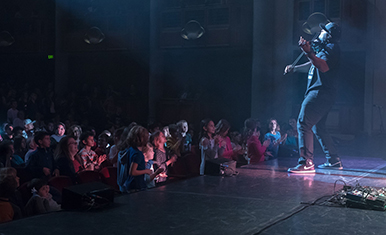
During the event, Sutherland read from his later books, giving a look into his more contemporary work. His reading could only be described as highly expressive, a committed and full-bodied performance complete with explosive movements and a strong authorial voice. His selections from both books encompassed a wide range of modes. At times his work is farcical and fantastical, with "Jokes" being storybook-like, filled with high wit and character(s), in the style of a sort of intentionally indecipherable political allegory. The "Meditations," on the other hand, are of a more reflective and confessional mode. The book has been described by the Sydney Review of Books as “the most extraordinary volume of English poetry in recent memory”.
Soong describes the book as “poetry bringing the mind to metastasize," a thinking that can be motivated by a desire to contain, while also failing to serve that desire. Written about the loss of a loved one, these poems are deeply moving, personal, and difficult. The reading culminated with “Meditation #45,” a heart-wrenching confrontation with grief and the fear of personal failure.
The Q&A session that followed was enlightening. With Soong leading, the audience got to learn about Sutherland’s relationship with writing in languages other than English, as well as his thoughts on the state of contemporary poetry. Sutherland also fielded questions about Marxism and literature, and about being a poet today in the U.K. After attending DU as a visiting writer, Keston also did a number of other literary events, giving a reading at Naropa the following Saturday, the sixth, alongside Dawn Lundy Martin and Valeri Hsuing. Tuesday the ninth, he gave a lecture, again at Naropa, on the British poet J.H. Prynne, titled “Can Prynne Be Read?”