CAHSS Professor Brings Psychedelic Music to Life with Book Launch
CAHSS professor Trace Reddell has published a book revisiting the mind-expanding power of music for the current psychedelic revival.
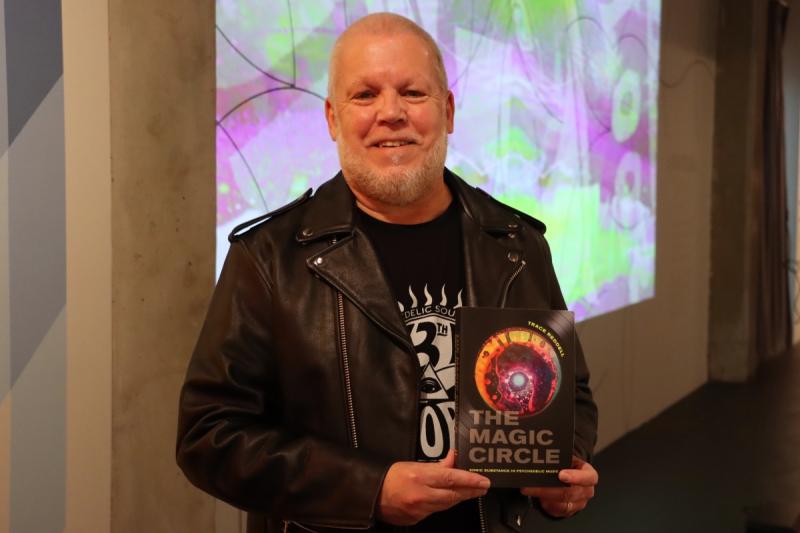
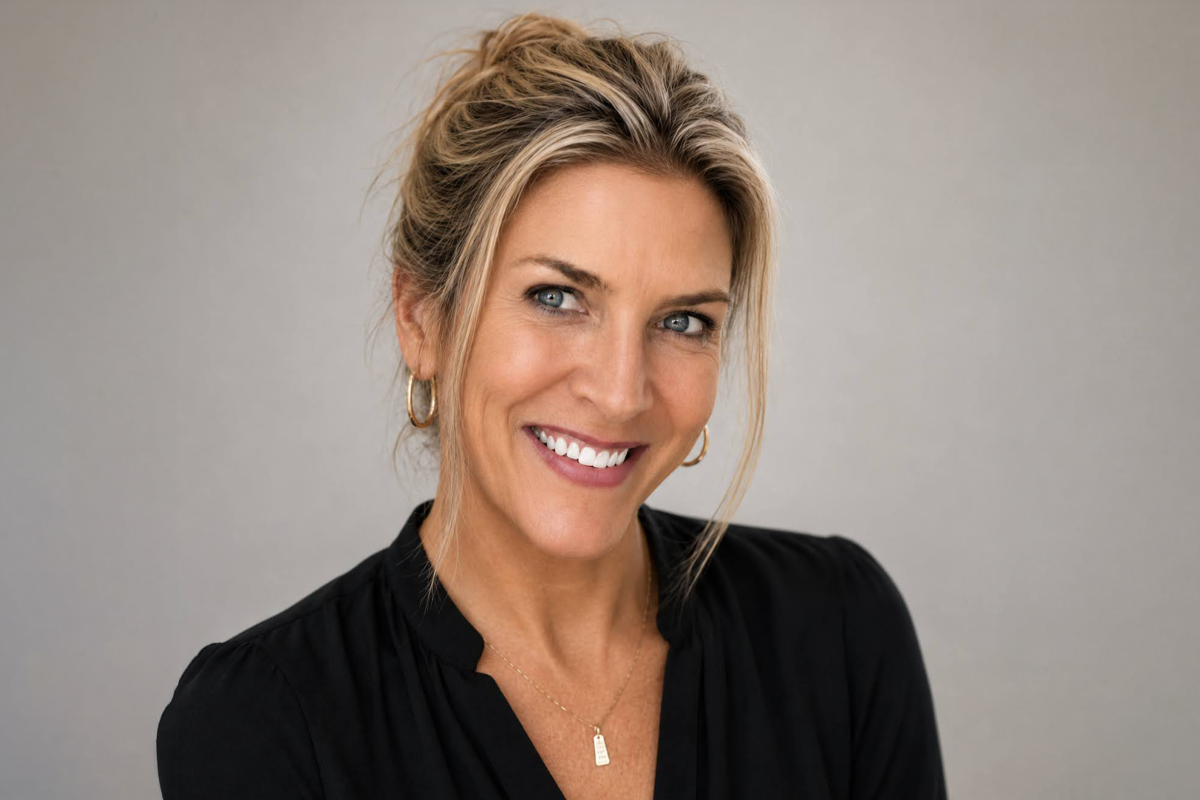
Trace Reddell. Photo by Hannah Fulk.
Art, Culture & Technology (ACT) Professor Trace Reddell will celebrate his new book, “The Magic Circle: Sonic Substance in Psychedelic Music,” with a book launch and audiovisual performance from 5 to 6:30 p.m. on Wednesday, Nov.11, at the Vicki Myhren Gallery on DU’s campus. The event is free and open to all.
Reddell will read from the book, play some of the music he writes about, and project live visuals. “Things should get pretty trippy,” he said, aiming for the performance to bring the book alive as a multisensory experience.
A second book event is set for Dec. 4 at Trident Bookstore in Boulder, CO, featuring Reddell’s live audiovisual performance lecture, a DJ set of psychedelic punk music curated by Reddell, and a performance by Boulder band Infinite Cousins.
“The Magic Circle” stems from Reddell’s popular advanced seminar, Psychedelia and the Age of AI, which he has taught for seven years in the College of Arts, Humanities & Social Sciences (CAHSS). The class aims for students to understand the ways we use recorded music to mediate our activities, feelings, and imaginations.
Grateful Dead bassist Phil Lesh once described psychedelic music as “any music you listen to on psychedelics.” Reddell modifies this, claiming that "music is inherently psychedelic,” he said. “It amplifies whatever you bring to it as a listener, and it expands our minds.”
While drawing on music journalism, media studies, and philosophy, Reddell also points to neuroscience, noting that the region of the human brain that psychedelics activate is the same region that is activated when someone is listening to music. Through his book, Reddell hopes readers will “recognize the power of music as something that is really important to us as humans, mentally and psychologically and spiritually,” he said.
Like a record album, "The Magic Circle” has two sides. Side one covers “set and setting,” the foundational concepts of psychedelic research that refer to a person’s mindset and surroundings. Side two explores what Reddell calls “sonic substance,” where set and setting blur, examining how sound acts as a material, transformative agency or liminal substance in music and media. Within this conceptual framework, Reddell discusses key psychedelic recordings by the Beatles, the 13th Floor Elevators, Jefferson Airplane, the Jimi Hendrix Experience, Pink Floyd, and other iconic bands from the latter half of the 1960s.
In the future, Reddell plans to explore further why psychedelic music persists beyond the 1960s into the modern century, from the neo-psychedelic bands of the 1980s and 1990s to today’s international scene, including psychedelic hip-hop, electronic dance music, and cosmic country.
Published by MIT Press, “The Magic Circle” is Reddell’s second book, following “The Sound of Things to Come,” published in 2018 by University of Minnesota Press, which explores sound and science fiction films. “Both presses were on my bucket list of outlets for my research,” Reddell says. He praised both for “being adventurous in looking for work that bridges different disciplines.”
His latest book also reflects the moment. “Everything’s been touched by this psychedelic renaissance we’re in right now,” he said. “Psychedelics are as potentially transformative as AI, and ultimately better for us humans.”