CAHSS Minor Empowers Students to Thrive in an AI-Transformed World
Launched this fall, the new Applied AI and Society minor helps students learn to use AI thoughtfully, judge when and how it fits, and build the human skills employers increasingly want.
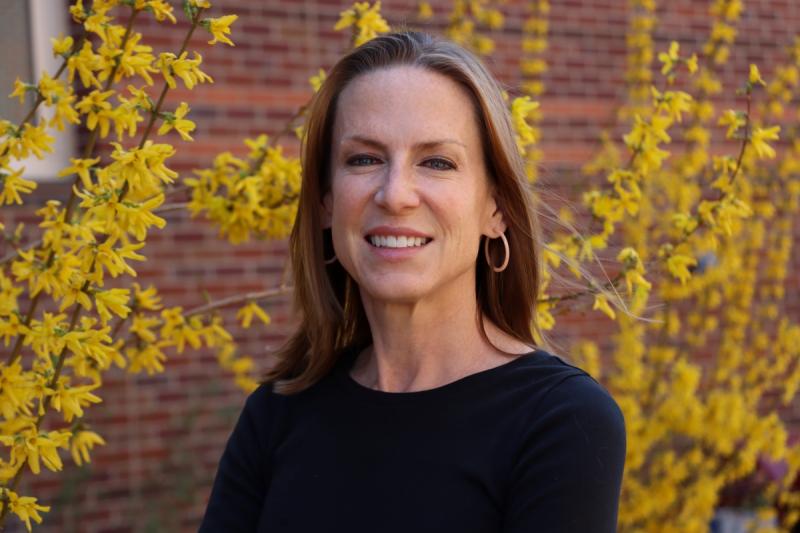
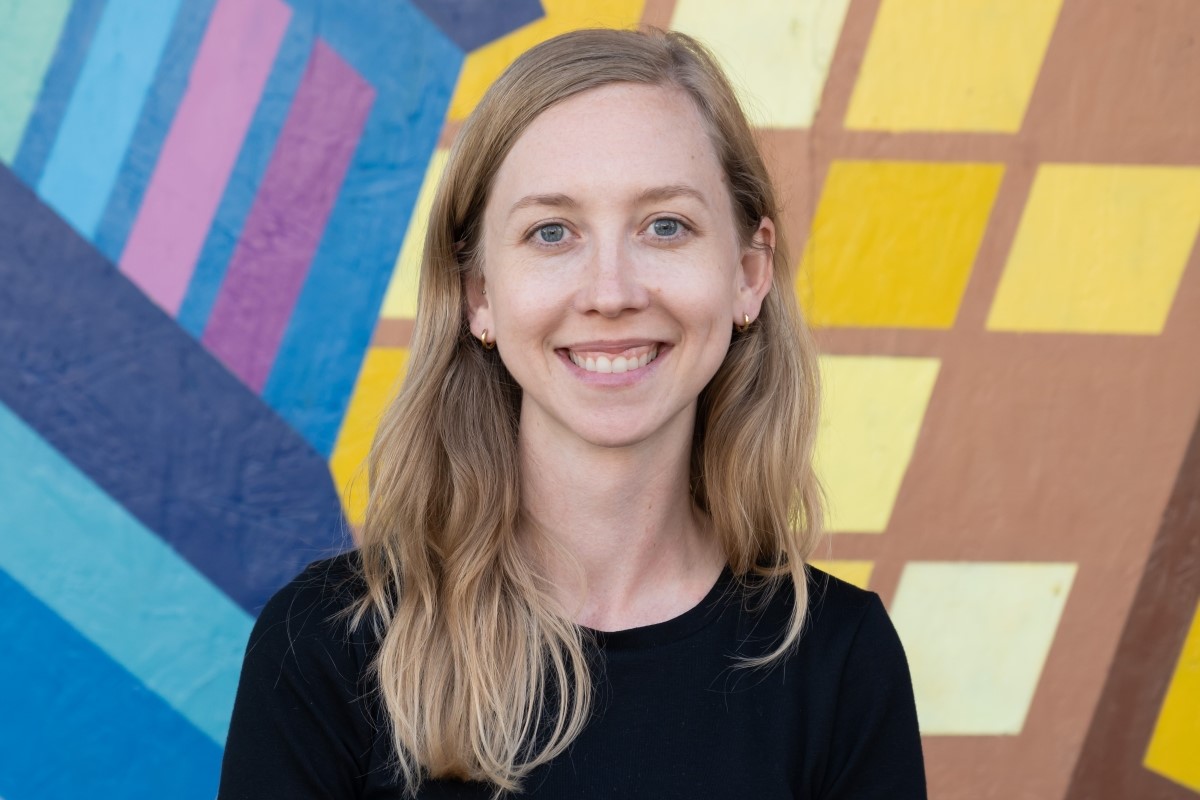
Associate Dean for Curricular Advancement and CAHSS Professor Andrea Stanton. Photo by Hannah Fulk.
Artificial intelligence is changing how nearly every field operates, and the people best equipped to navigate that shift may not be the ones you'd expect. Increasingly, employers are turning to liberal arts graduates, who bring the critical thinking, ethical reasoning, and real-world judgment it takes to use AI tools well rather than just quickly.
That's the idea behind the Applied AI and Society minor, which consolidates courses across the College of Arts, Humanities & Social Sciences (CAHSS) and the University of Denver. Students learn to understand AI across disciplines, apply AI responsibly, weigh where and when it belongs, and analyze its impact on society.
We asked Academic Dean for Curricular Advancement, Professor Andrea Stanton, who created the new minor and serves as its director, to discuss how it benefits students and why it fits naturally into the college’s interdisciplinary approach to addressing complex human questions.
What inspired you to create the new AI minor?
Many CAHSS colleagues were already engaging substantively with AI in their research, creative work, and public-good engagement. The new minor brings all that together, enabling students to pursue a more AI-focused path while specializing in the areas that interest them.
We also reached out to our colleagues in the Ritchie School of Engineering & Computer Science. They had just created the course “Understanding AI” for non-computer science majors and generously agreed to let us use it to anchor our minor.
While most courses are rooted in CAHSS, we always appreciate the chance to collaborate across the university. Offering the minor and any AI-related courses this way builds on the interdisciplinary collaboration we inherently value.
The new CAHSS imp:ACT Institute will serve as an umbrella under which all CAHSS interdisciplinary programs, including this minor, will operate, right?
Yes. We live in an interconnected world, and as human beings, we think in interdisciplinary ways. We don’t want to dismiss the importance of disciplines. But we do want to recognize that the importance of connections between disciplines lies in building a hub that unites our interdisciplinary programs across our college and university.
I’m also passionate about helping our students channel the learning and experiences they gain in our liberal arts programs into their careers. It’s already built into our curriculum and simply requires helping students and faculty connect the real-world skills that a course, internship, mentorship, or hands-on work develops with career possibilities. Interdisciplinarity supports versatility, collaboration, creative thinking, and complex problem solving, all the qualities employers say they want and need, and that we want our students to have, so that they can make a positive impact on our world.
How does this minor specifically prepare students to excel in an AI-transformed workplace?
We intentionally called it “Applied AI and Society.” We’re looking to help students develop their user knowledge and apply it to AI decision-making. Employers want to hire graduates who can make thoughtful, real-time decisions about when, why, and how to use AI.
The AI minor helps students address those broader questions and apply them to specific contexts. What does using AI mean when I’m reading a novel and writing an article or recording a podcast about it, for example? What does it mean in language-learning settings? What about when designing or managing a project?
What about students nationwide expressing concerns about how AI affects their learning and thinking, as well as its environmental impact?
We know from history that technological innovations often face an initial backlash. Today, Gen Z and Gen Alpha students are leading the way in asking questions about how we should integrate AI, particularly generative AI, into our world. I see their efforts as applying critical questioning rather than a backlash.
It’s extremely hard today to avoid engaging with AI, so our focus is on determining responsible use. We want AI-literate students who can decide, in specific professional contexts, that ‘here’s a responsible use that makes sense, here’s a use that doesn’t.’ We teach our students to think critically and make those evaluations, and then we step back and let them take the lead.
And that’s what liberal arts is all about, right? Learning to think broadly, deeply, and discerningly?
Yes! Especially because the question of AI use is continually evolving. The conversations we’re having about AI in 2026 are so different from those we had in 2024 and will have in 2028. We need people in the working world who can examine each use, evaluate it effectively, and decide. A liberal arts approach prepares today’s students — tomorrow’s graduates — to embrace this vital role.

AI-literate. Human-centered. Career-ready.
See how the Applied AI and Society minor prepares you for what's next.