The Names History Tried to Forget: Anthropology Alumna on Monuments, Memory, and Repair
From Long Island manor houses to a monument in Alabama, Maddy Bonner (MA '23) seeks to highlight the work that brings erased names back into the historical record.
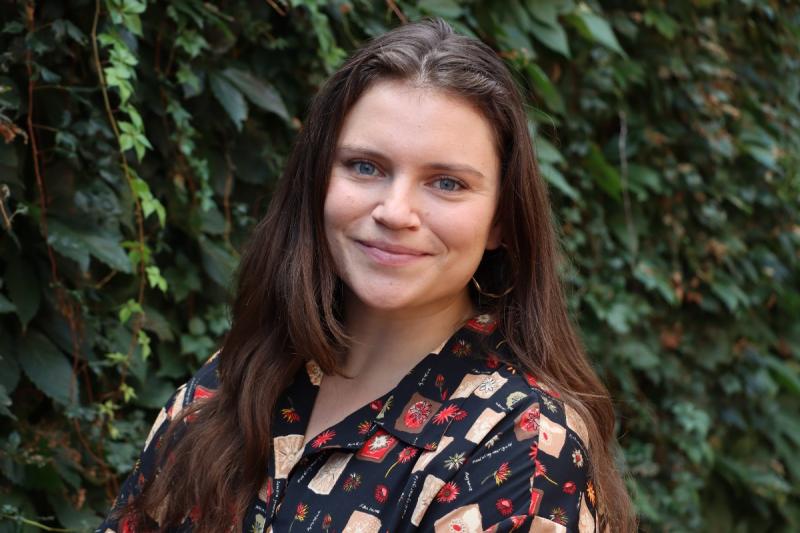
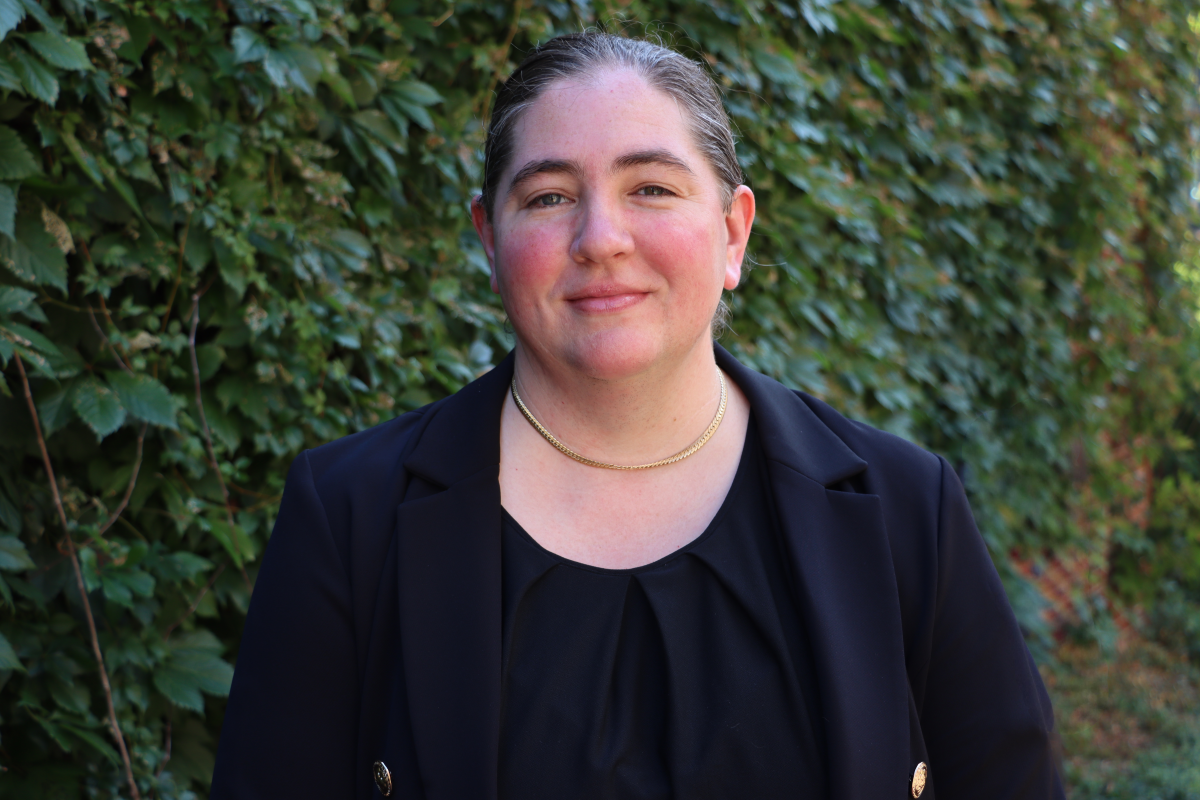
Maddy Bonner. Photo by Hannah Fulk.
Whether she’s standing in a centuries-old manor house on Long Island or touring ancient ruins in Turkey, Maddy Bonner (MA ‘23) has found one constant responsibility in her work: communicating history in a way that respects every generation who lived through it. All too often, the marginalized voices of history have been locked away, revised, or erased, so when her work spans hundreds or thousands of years, Bonner works to ensure the voices being highlighted are there because they deserve to be.
Bonner earned her master's degree in anthropology with a concentration in museum and heritage studies in 2023 from the Department of Anthropology in the College of Arts, Humanities & Social Sciences (CAHSS). Today, she works at World Heritage USA, researching historic sites, monuments, stories, and silences that are built into the landscapes around us.
In her role as Research and Publications Program Associate, Bonner creates toolkits and online resources on the politics of preserving controversial monuments and memorials across the United States.
"I get to be an anthropologist and use the technical skills that I learned in graduate school to investigate topics that are interesting to me and to collect historical perspectives on important conversations," Bonner said. "If you had asked me what my dream job after grad school would be, it would be this."
Speak Their Names
Ask Bonner about what studying anthropology teaches you, and she comes back to a habit she has honed over years of field work: the ability to zoom in and out. In her work, she zooms in on a single person, a single room, a single name. Then she zooms out to the generations who built the systems and spaces we've inherited.
For example, on a research trip to Shelter Island, New York, Bonner visited the Sylvester Manor House, a suspected Underground Railroad site, where the site's longtime lead researcher, Dr. Georgette Grier-Key, told her she could "feel the presence of the people who were in this place before you."
During this same trip, Bonner also visited the Lloyd Manor House, where Jupiter Hammon was enslaved. Hammon, whose work was published in 1761, was the first published African American poet in what would eventually become the U.S. Built before the Revolutionary War, the house still bears graffiti carved by British soldiers who once occupied it. Its narrow, steep back stairwells, which enslaved people used to move through the house unseen, remain intact.
"[When visiting historical sites] You just get this feeling that you are one more person walking that path," Bonner said. "A lot of times, it can be difficult to identify the names of those lost in history, especially ones that were erased due to prejudice,” she said. “It is an honor that part of my work is shedding light on those stories.”
Hopeful History
"One of the most important things that anthropology has taught me is that we built this world," Bonner said. "Our social, governmental, and cultural systems, even the smallest of our everyday norms, are things we built ourselves."
This kind of realization can seem overwhelming. Instead, Bonner finds hope in it: if people built these systems, people can also revise them.
She points to Montgomery, Alabama, where a statue still honors a physician known as the father of modern gynecology, whose research relied on nonconsensual experiments on enslaved women. Around the corner, artist and activist Michelle Browder purchased a plot of private land and installed the Mothers of Gynecology Monument, honoring the three enslaved women named in his case records: Anarcha, Lucy, and Betsey.
"It's about incorporating those names back into the historical narrative," Bonner said.
Mentorship and Belief
Bonner traces much of her confidence in her current role back to her time as a student in CAHSS. "My advisor, [Professor] Christina Kreps, believed in me before I believed in myself," she said.
Kreps’ belief in her stayed with Bonner well beyond graduation. In 2024, Bonner even returned to CAHSS as an adjunct professor to teach Museums and Public Culture, the same course she had taken as a student with Professor Kreps.
Bonner also credits the broader anthropology faculty with shaping her teaching style, often without her realizing it at the time, and cites professors Kelly Fayard, Alejandro Ceron, and Bonnie J. Clark as key influences.
Bonner's advice for anthropology students, prospective and current, is simple: raise your hand. Participating in discussion-based classes at the University of Denver taught her the importance of articulating her thoughts on the spot, a skill she now relies on constantly. She also points to the trust built within her cohort.

Uncover the Histories Behind the Landmarks
Explore anthropology graduate studies in anthropology in CAHSS.