English & Literary Arts Alumna Named as Finalist for National Book Award for Poetry
CAHSS alumna Carolina Ebeid's book, "Hide," is a finalist for the prestigious National Book Award for Poetry.
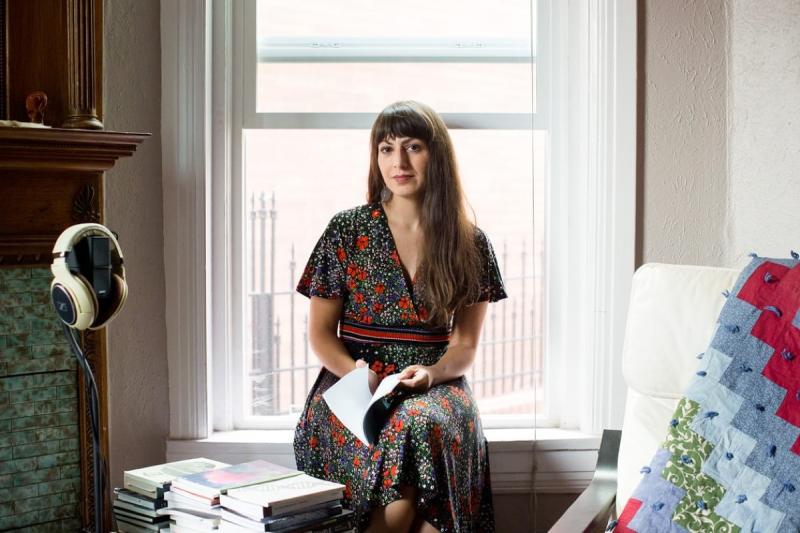
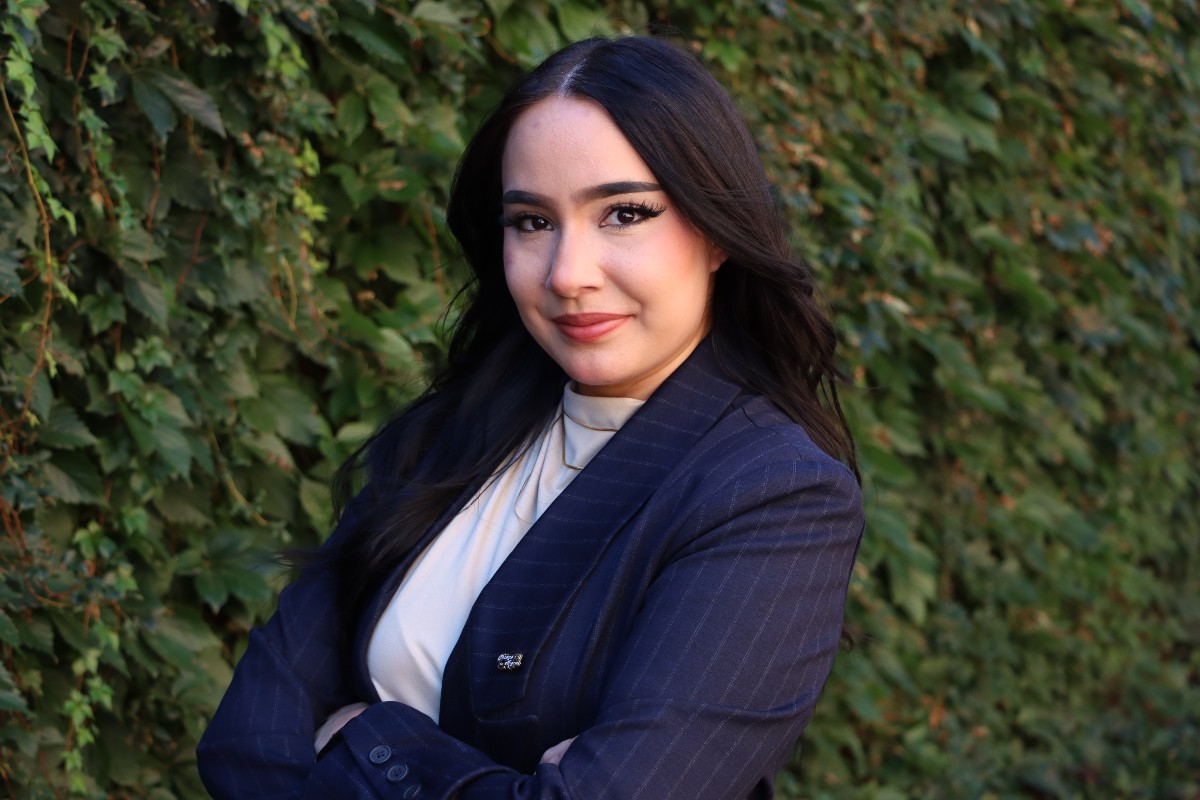
Carolina Ebeid. Courtesy photo.
Carolina Ebeid (PhD ’19), an alumna of the Department of English and Literary Arts in the College of Arts, Humanities, and Social Sciences (CAHSS), is a finalist for the National Book Award for Poetry. Ebeid earned this nomination for her poetry book, “Hide,” published in March 2026 by Graywolf Press, which "gathers shreds of memory, dream, and the ordinary artifacts of diaspora, as she casts a sounding line into her patrilineal and matrilineal histories in Palestine and Cuba."
In the following Q&A, Ebeid reflects on her time in CAHSS, what it means to be a finalist for this prestigious award, and advice for students who are hoping to one day be published authors.
The winner of the National Book Award will be announced on Wednesday, November 18, 2026.
What does being a finalist for the National Book Award mean to you, and what impact do you hope your book, “Hide,” has on the world?
When I found out that “Hide” was longlisted for the National Book Award by way of a text message from my editor, various waves of emotion coursed through me, and I distinctly recall an inner reaching toward my mother, who would be elated. The book is in part dedicated to her memory. When one publishes a book, it is an exercise in letting go, trusting the poems will find readers unbeknownst to me. I’ve been asked over the months since my book has come out if I’ve been pleased with its reception, and the question perplexes me a bit because the kind of reception that matters to me is mostly invisible to me, and it takes a long time. If any single line from “Hide” encourages another writer to make a poem, then that makes me feel connected to a larger, sacred network.
How was your time in the English PhD program, and what skills did you develop there that helped you professionally?
I graduated in 2019, which seems like a different era in that it was before the pandemic changed much of our lives. The University of Denver (DU) put me in contact with writers who would become lifelong friends. What I admire most about my doctoral time was the space it provided for critical-creative experimentation with the structure of 10-week classes and niche tutorials, such as the tutorial called Listening to Birdsong with professors Donna Beth Ellard and Bin Ramke. I could list a number of skills that I developed at DU that have since helped me professionally. At the top of my list would be my practice of one-on-one meetings with students, which I model after my visits with the kind, attentive, and patient Professor Ramke, where I’d bring in the start of a poem, or a question, or a small passage from my readings, and we’d weave an oddly beautiful tapestry of a conversation that might include neuroscience, film, music, ecology, and any other far-reaching discipline wanting to surface.
What advice do you have for students who want to write and publish a book?
I would pass along the advice given to me by professor Graham Foust; he has a daily practice of engaging with poetry or art every day for at least two hours. It seems vital to develop these lifelong habits of reading, writing, and thinking to safeguard my precious attention and time. It was fortunate I studied in a supportive program that nurtured my writing throughout my experience, eventually culminating in the production of a book-length work. My advice grows out of one word: courage. Be prepared and undeterred by rejection. Send your writing to journals and presses; share your work in smaller ways by participating in public readings. Tend to the relationships you make with teachers, fellow writers, friends, and editors. “Networking” can often be an odious word, though the construction of a wide net of connections will almost certainly be worthwhile and beautiful.