Why Study Anthropology

All professions require an understanding of what it means to be human and to act humanely. That core competency is at the heart of anthropology and one from which our students build as they learn such skills as the study of objects, community consultation, or creating affective media.  

  • What Do Anthropologists Do?

    What can you do with your anthropological training to help groups and organizations get things done?

    Almost every job, from selling cars to going to the moon, involves dealing with people. Anthropologists study people. Dealing successfully with people, whether they are customers, constituents, clients or partners, requires social knowledge. Anthropologists study people and are experts at capturing that social knowledge, providing the information that is essential for getting the job done successfully. 

    Here’s how anthropologists turn that social knowledge into action: 

    1. They help people figure out what the key questions in any situation are. 
    2. They use investigative methods to find the answers to those questions. 
    3. They use this information to help plan effective responses. 


    In other words, anthropologists help people and organizations get things done by using: 

    A set of skills in data collection, analysis, interpretation, problem solving, and implementation 

    A knowledge base centered on how anthropologists approach and solve problems

    An anthropological perspective which includes an appreciation for qualitative as well as quantitative data, a holistic approach which incorporates insider viewpoints, and an emphasis on the cultural context to build understanding.

  • Where Do Anthropologists Work?

    Most anthropologists work collaboratively with other specialists and partners across the public, private, and non-profit sectors.

    Business: advertising, communications, human resources, management consulting, user experience, organizational development, product design, technology, training, and many more.  

    Research and/or Consulting Firms: quantitative and qualitative research, project management, community engagement, and more. 

    Nonprofit Organizations: administration, advocacy, social services, grant writing and fundraising, community development, and program management in the arts, human rights, social justice, environmental conservation, and many other areas. 

    Museums and Cultural Institutions: exhibit curation, artifact preservation and restoration, education, archival research, and more. 

    Archaeology and Cultural Resource Management Consulting Firms: excavate, assess, and mitigate the impact of construction and development projects on archaeological sites or resources, and work with Tribal and descendant communities to preserve their heritage. 

    International and Nongovernmental Organizations: addressing issues of cross-cultural understanding, policy implementation, and global challenges like climate change. 

    Universities and Research Institutions: administration, academic research, teaching, and resources and support services. 

    Government Agencies: policy analysis, development, and implementation, project management, resource management, and community development. 

    Healthcare and Public Health: administration, communications, community health, mixed methods research, behavioral health, emergency preparedness, program evaluation, and more. 

    Media and Publishing: content and marketing strategy, social media management, journalism, video production, copy writing and editing. 

    Forensics: human remains identification for law enforcement or in disaster situations, forensic archaeology, and many other areas.

  • What Is the Job Market Like for Anthropologists?

    The job market for anthropologists is healthy, with 10-year growth predictions from various sources ranging from 4% (in line with the overall U.S. growth rate) to upwards of 10%.

    An Associate’s degree is an introduction to key anthropological concepts which are useful in understanding cultural differences in organizations and communities. 

    A Bachelor’s degree in anthropology opens up interesting jobs in a wide variety of areas, using skills in data collection, analysis, and planning. 

    A Master’s degree is a professional degree for many anthropologists, who then go on to advance in a variety of careers in industry, government, or the non-profit sector. 

    A PhD in anthropology leads to a variety of specialized roles, often focused on research. It is also an entry-level qualification for becoming an academic. 

What Can You Do With an Anthropology Degree from DU?
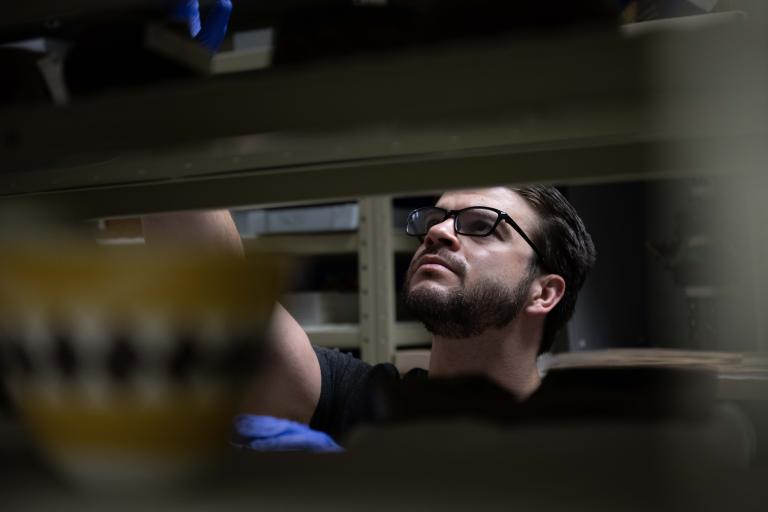
person working in DUMA

Versatile & Widely Applicable 


One of the great benefits of anthropology is its versatility. Even if you focused in on one topic or sub-field in school, you will continue to learn and grow throughout your career. You are never stuck on one path, because you can change jobs or organizations. You can also craft new careers, defining your own path.

Looking For What's Next?

network icon

Anthropology Career Readiness Network

Hundreds of anthropologists have contributed to the Anthropology Career Readiness Network since its launch in 2021. As a broad, volunteer network, it has the support of numerous anthropology professional associations covering all subfields.

Learn More
graduation cap icon

Alumni Success Stories

Our department has a strong group of alumni who practice anthropology in a variety of professional settings, from doing cultural anthropology in National Parks, to applying cultural expertise in medical settings, to the study of user experiences for tech firms.

Learn More