Finding Meaning in Translation: How Japanese and Journalism Shaped This CAHSS Student’s Journey
Senior Katie Sandoval blends journalism, Japanese, and studio art, using literary translation to chart her path toward international photojournalism.
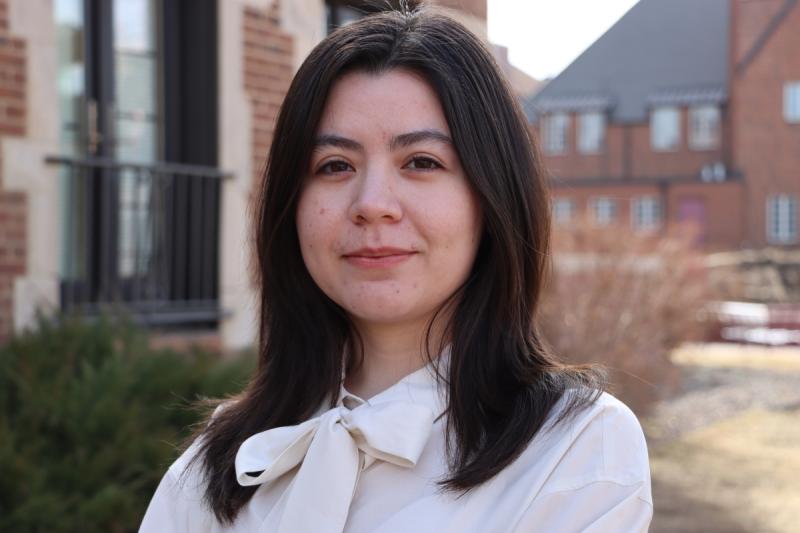
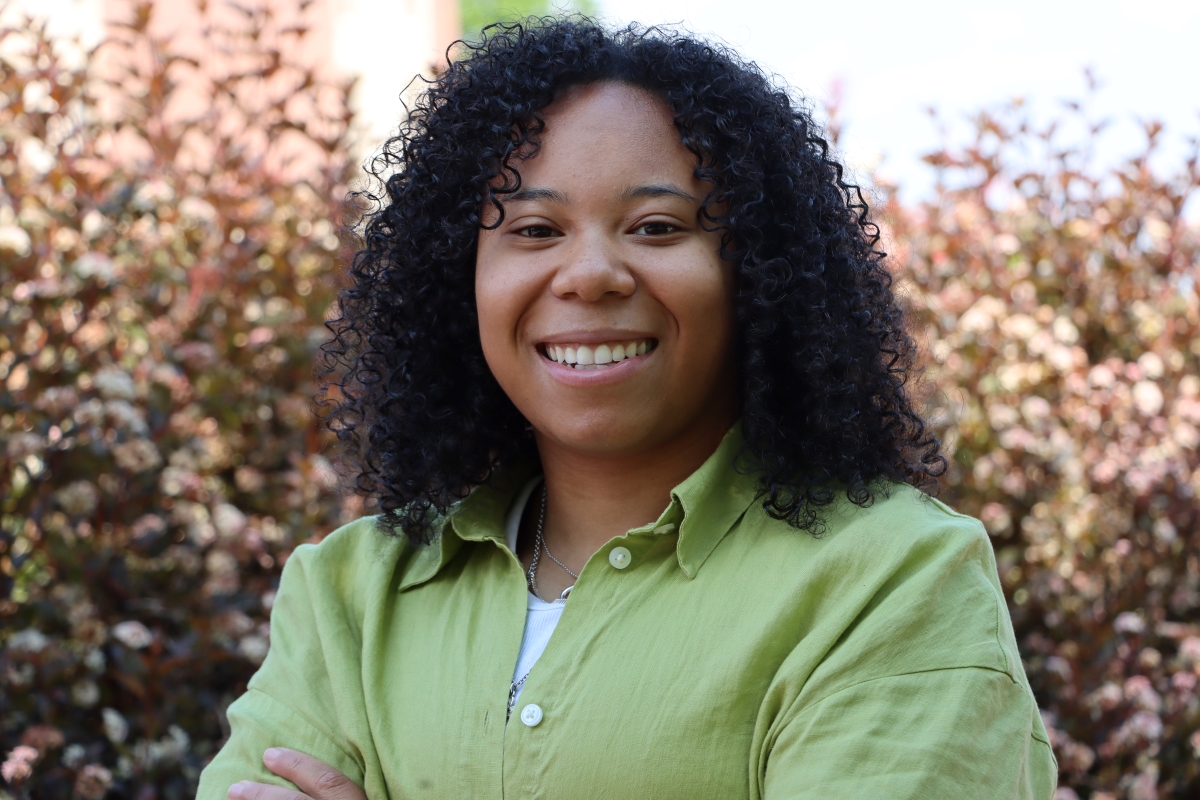
Katie Sandoval. Photo by Hannah Fulk.
When Katie Sandoval first arrived at the University of Denver from San Antonio, Texas, she knew she wanted to tell stories, but she didn’t yet know what language those stories would be in, or where they might lead her.
Now a senior double majoring in journalism and Japanese, with a minor in studio art, Sandoval has woven together interests across the liberal arts that once felt separate. Along the way, she discovered that meaning, whether in language, creative imagery, or reporting, is rarely about perfection and instead about connection.
Sandoval was drawn to the College of Arts, Humanities & Social Sciences (CAHSS) for its quarter system and emphasis on experiential learning: “The idea of getting through classes faster and being able to try more classes really interested me,” she said. Just as important were the study abroad opportunities offered in CAHSS, which promised learning beyond the classroom.
Studying Japanese entered Sandoval’s academic path almost by chance. She enrolled in her first course to fulfill a language requirement, but working with dedicated faculty mentors quickly shifted her perspective. “If I hadn’t taken my first Japanese class with Miss Hamamoto, I probably would have felt hesitant to continue at all,” she said.
That early support from CAHSS faculty led Sandoval across the world. In the spring of her junior year, Sandoval spent five months studying at Doshisha University in Kyoto. Immersed in Japanese daily life, she found herself relying on the language in unfamiliar situations. “Going to places that were less known [in Japan] is when you really have to use the language you have been learning,” she said.
Once she returned to campus in the fall of 2025, Sandoval’s interests converged in a Japanese translation course taught by assistant professor Laurel Taylor. The class challenged Sandoval to think beyond translational accuracy and towards language intention and audience. “Translation isn’t about being perfect,” she said. “It’s about getting the meaning across.”
With Taylor’s encouragement, Sandoval submitted a literary translation for publication. She described the revision process as rigorous and humbling, yet months later, when the piece was published, the experience had reshaped her confidence as both a writer and a language learner.
Sandoval hopes to use her skills in an international newsroom to translate Japanese articles into English, making more stories accessible across cultures at the juncture of her journalism and Japanese ambitions.
Lessons learned through translating language also broadened Sandoval’s academic interests into studio art and photography, stating that “it made me start thinking differently about photography and how translating something visually can vary from person to person,” Sandoval said.
As graduation approaches, Sandoval plans to pursue a career in photojournalism focused on travel and culture: an ambition that once felt distant. “It’s always been a goal,” she said. “But now, it feels possible.”
For Sandoval, DU has been a place of discovery, where trying something new led to unexpected opportunities, and where learning to communicate across differences became both an academic pursuit and a personal strength.
Are you interested in studying subjects in liberal arts like Katie? Meet faculty, staff & current students at CAHSS Preview Day on April 13!
Related Articles
CAHSS Japanese Language Student Represents U.S.A. as Youth Ambassador at 2025 Osaka World Expo
Read More
DU Japanese Program Connects Student with Roots, Study Abroad Opportunity
Read More