Inside MFJS: A Conversation with Carlos Jimenez Jr.
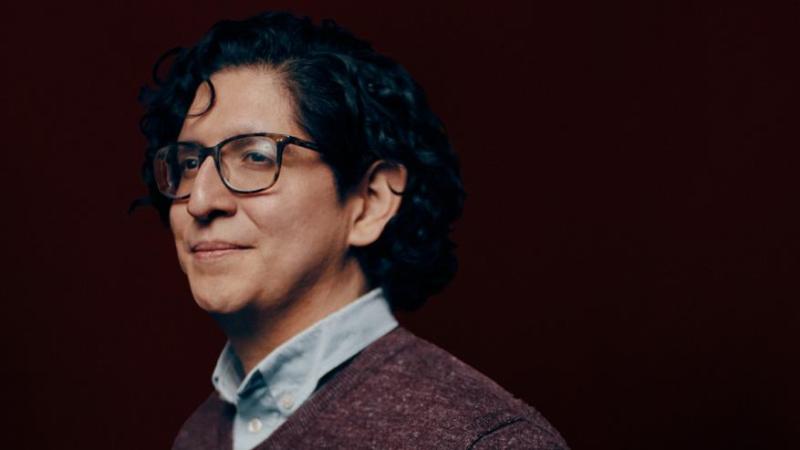
MFJS Associate Professor Carlos Jimenez Jr. Courtesy photo.
At the University of Denver, Media, Film and Journalism Studies associate professor Carlos Jimenez Jr. is redefining how students engage with media, blending storytelling, education, and community connection into every aspect of his work. Influenced by his roots in Chicago’s rich arts and cultural landscape, Jimenez centers mentorship and purpose-driven creation in the classroom, encouraging students to move beyond theory and into meaningful practice. Whether he's guiding students through audio documentaries or leading community-focused research, Jimenez emphasizes media as a tool for sharing lived experiences and amplifying voices that are often overlooked.
In the following Q&A, Professor Jimenez reflects on his path into media, what makes MFJS a unique department, and how he prepares students to create work that makes a real-world impact.
What sparked your passion for media/film/journalism?
My passion for film and media is rooted in both the creative and the practical. Creatively, I love the ability to dream something and bring it to life as a cinematic visual or to write a script and hear the dialogue come alive.
However, a strong driving force in my life came from a practical, educational goal. In college, I wanted to learn about media and film production so I could bring these tools back to my neighborhood in Chicago, Illinois and set up a nonprofit arts center for local youth.
As a high schooler, I was exposed to great mentorship at Yollocalli Arts Reach, an award-winning youth initiative of the National Museum of Mexican Art. Later, while at DePaul University, I visited Batey Urbano in Humboldt Park and saw their incredible work with radio, dance, and theatre. Founded in 2002, Batey Urbano was a space for critical expression through spoken word, poetry, dancing, music, painting, and writing.
My core goal was to establish a similar, youth-focused program in my own neighborhood — I, of course, continued my education that resulted in me becoming a professor. This initial passion for educational mentorship and community engagement remains a central part of my work today.
What makes MFJS such a unique program?
What makes MFJS truly unique is the wide, integrated range of expertise we offer through our faculty. We cover the full spectrum — from incredible research scholars to creative artists, and those, like myself, who blend both.
While many academic programs strictly separate theory and practice, or focus narrowly on one area like film screenwriting or strategic communication, our students are trained to understand history and scholarship while gaining vital hands-on experience and even working with real clients. The end result is a highly versatile graduate entering the job market with a dynamic skillset and a competitive portfolio to match.
What's your favorite class to teach and why?
My favorite class to teach is Audio Documentaries, which is essentially a podcast production course.
It challenges students to tell a compelling story without relying on visuals or the traditional objectivity of news radio. It forces them to hone in on what makes a story engaging purely through sound. A key element of the course is writing and reading their own narration, which compels them to write in a way that they naturally speak. For many students, this is surprisingly difficult after years of writing in a scholarly or overly formal voice. This class is where they truly learn to find and embrace their authentic voice in their writing.
What's a recent project or research you're particularly proud of?
I'm currently very proud of a recent research project funded by a competitive, two-year National Science Foundation (NSF) grant.
Last year, working with colleagues from University of California, Santa Barbara, we began studying the communities living and working near the Vandenberg Space Force Base in Lompoc, California, who are experiencing the increased launch cadence of SpaceX rockets. We are focused on understanding the perceptions of often neglected communities: Indigenous populations, incarcerated persons, and agricultural workers regarding the launches. I led research on the agricultural community in the area and, this past July, completed an intensive outreach and interview agenda, achieving 50 interviews with farmworkers. We are set to present our preliminary findings this upcoming fall at the American Studies Association conference.
What advice would you give to students breaking into the industry today?
My advice to students looking to break into the industry or simply find success is to be a person who consistently schedules and prioritizes their goals and dreams. At the same time, start doing the things the person you want to become would do. Sometimes we wait for all things to fall into place, but don’t. Just start the work.
The ability to organize your days and weeks and regularly chip away at projects is what truly separates successful professionals from those who struggle to launch. Similarly, I highly recommend interning or volunteering with a company or an individual doing the job you want. This hands-on experience provides invaluable insight, networking opportunities, and a tangible track record.
What notable projects have been published, screened, or recognized with awards?
I'm very proud that a podcast I produced, Hear Allá Presente, won "Best Narrative Podcast" at the 2023 Society of Professional Journalists (SPJ) conference. The podcast was funded by DU’s Center for Immigration Policy and Research and focused on immigration issues within Colorado. Additionally, numerous students in my courses have received awards for their own podcast work from the Society of Professional Journalists, and several others work for local audio productions, the city, and community centers.