Tuning Into a New Year: How Deep Listening Can Change Everything
In a noisy world amplified by the relentless pings of technology, what if we could learn to use the sounds around us not to feed further distraction and anxiety, but to unleash uninhibited creativity, connection, focus, and joy? That’s the idea behind “Deep Listening,” a practice created by Pauline Oliveros, a composer, musician, and philosopher who developed a radical approach to music making that invites everyone into a field of embodied presence and boundless creativity.
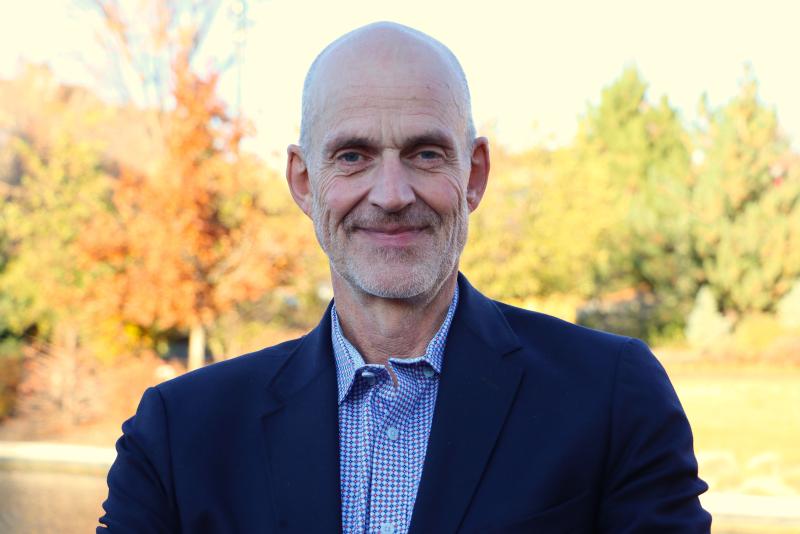
Lamont School of Music Director Brian Pertl has immersed himself in researching and studying deep listening, incorporated its principles into his approach to music education, and taught classes on the topic in his prior position as Dean of the Lawrence University Conservatory of Music. He has already integrated deep listening into his role at Lamont and will offer a class on deep listening for students across disciplines later this year.
We asked Pertl to share more about deep listening and provide tips for harnessing its transformative power in our work and lives as we move into a new year.
What is deep listening and how did it emerge?
Deep listening focuses on using what you hear to come back to the present moment. Rather than closing your eyes and clearing your mind like you would in other meditation practices, you’re tuning into the world around you.
Pauline was fascinated by sound and when the first reel-to-reel tape recorders came out, she stuck the microphone out the window and hit record. She also stuck her head out the window and listened. Playing the recording back revealed all the sounds the tape recorded that she didn’t hear. Inspired to become a better, deeper listener she sought to listen to all things like a microphone. That also meant listening through your body and listening to sounds happening in your mind — even a song stuck in your head and sounds in your dreams.
Teaching deep listening over many years, I realize that this is something we all need. So many students said this was the first time they felt they completely belonged, felt completely valued, heard, and seen. It’s also something I used in my years working at Microsoft, engaging people to think creatively and foster innovation. I rolled it into entrepreneur classes designed to expand their zone of comfort and allow their brains to become radically playful.
How are you introducing deep listening in Lamont?
One of the seminal pieces Pauline composed, “Teach Yourself to Fly,” involves coming together and centering ourselves, doing a breathing exercise, focusing and listening to your breath while listening and responding to everyone in the room. That slowly transforms into listening to sound and, over time, into vocalization and singing.
It builds community incredibly quickly because I reassure people that whatever and whoever you are bringing into the room that day, including if you don’t want to sound, is totally fine as long as you’re present and listening. It puts musicians in a safe place of improvising that they might not have experienced before if they’re classically trained and tells them the only thing that matters is your ideas, your creativity, your voice. It doesn’t take long for people to experience something cathartic. This isn’t a willy-nilly alternative to creating world-class music, it’s the road into reaching the most magnificent heights of music making.
We started our first Lamont faculty meeting and our first convocation with the students with deep listening and have used it in faculty meetings. We did the “Teach Yourself to Fly” piece with students and when I asked afterwards if anyone wanted to share, one student said: “It made me a little anxious, but I started to think about what we were doing, and I really believe that the whole reason we’re here is to find ways of being comfortable in the uncomfortable.”
Can you also share tips on how to apply deep listening in our individual daily lives?
One way is to “Listen Like a Microphone.” Human hearing is very selective — we minimize certain sounds and focus on others. But listening like a microphone means tuning into all the sounds around you as you walk across campus. You can ask yourself, what’s the most distant sound I can hear right now, what is the quietest sound? Suddenly you hear the little bird singing in a tree and it blends into the Carillon bells that have started ringing and the engine of a truck going by. You rediscover a familiar place and that childlike wonder in the world. Listening this way eventually expands to seeing this way, too.
Deep listening is also about listening to our embodied selves. My classes include an “impulse dance” in which you close your eyes and listen and respond to where your body wants to go — maybe starting with just a little twisting or movement in your hands and arms. You can do this when you wake up or before bed. The idea is to center and become present through exploring yourself as a listener, looker, and mover.
You can use deep listening to help you sleep by doing deep breathing and opening your awareness to the sounds all around you. Shifting the focus away from the anxiety we have about not sleeping to curiosity about everything you hear can help some people transition into sleep. Deep listening also emphasizes paying attention to the sounds in your dreams. We encourage people to start dream journals which could mean writing their dreams down in a journal as soon as they wake up or dictating them into their phones. It’s about simply recording the sounds, sights and bodily sensations that you noticed, learning to tune in regularly to both your awake and sleeping world.
How Can CAHSS Students Use Deep Listening in Their Daily Lives?
One way is to Listen Like a Microphone.
Ask yourself:
• What’s the most distant sound I can hear?
• What’s the quietest?
Suddenly, the world around you opens — you rediscover wonder in what you thought you already knew.
Deep listening is also about listening to our embodied selves. Movement practices like “impulse dancing” help reset your mind and release stress — five minutes can change your entire day.
Struggling to sleep? Shift from frustration to curiosity. What do you hear around you? What sounds emerge in dreams? Start a simple dream journal — scribbles count.
The more you practice paying attention, the more your awareness — and your creativity — come alive.
Related Articles
CAHSS Professor’s Research Aims to Reduce Potential Harm from Psychedelics Use in Real-World Settings
Read More
CAHSS Criminology Assistant Professor’s Work Explores the Covert Nature of Human Trafficking
Read More