What Can You Do With a Religious Studies Degree? DU Faculty Are Rewriting the Narrative

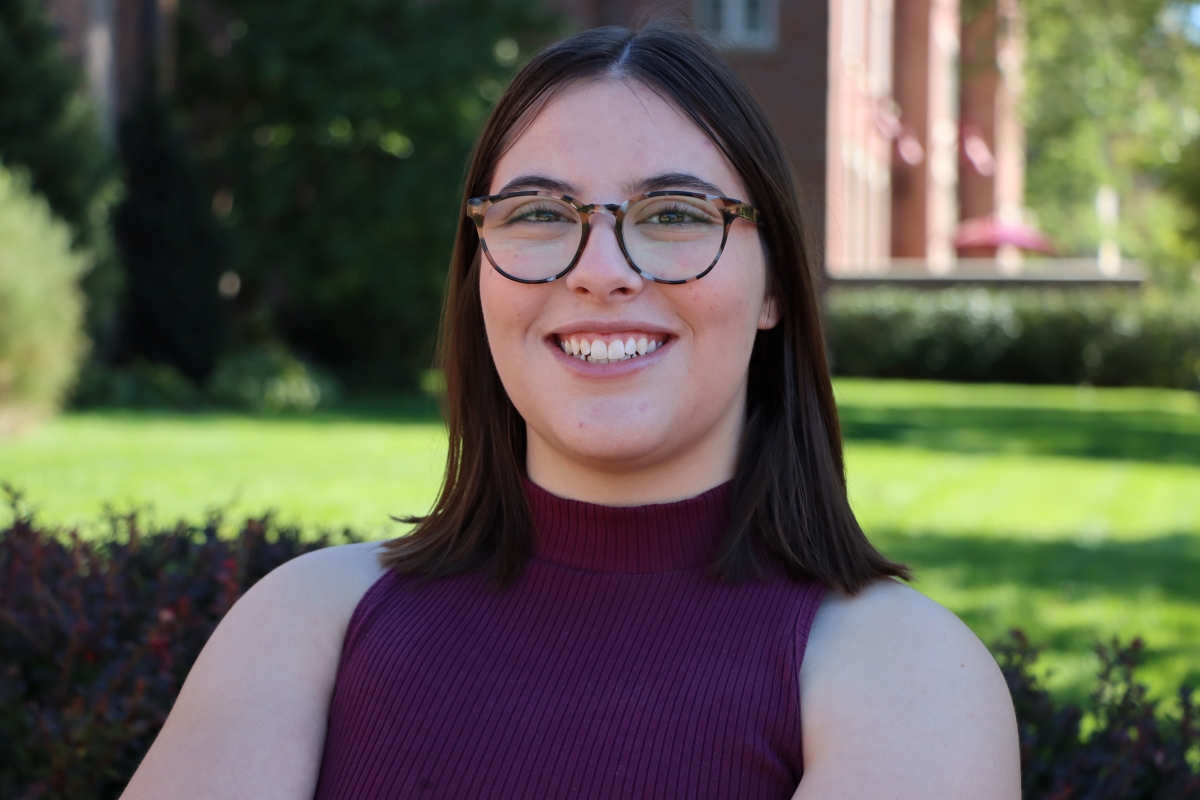
Senior Associate Dean and Professor of Islamic Studies Andrea Stanton. Photo by Hannah Fulk.
Senior Associate Dean and professor of Islamic Studies Andrea Stanton has been awarded a competitive grant from the Wabash Center for Teaching and Learning in Theology and Religion, positioning the College of Arts, Humanities & Social Sciences (CAHSS) at the forefront of efforts to connect humanities education with career readiness.
Stanton received the grant alongside co–principal investigators Christy Cobb, associate professor of Christianity, and Ben Nourse, associate professor of Buddhist Studies. Running from September 2026 through June 2027, the project being funded will focus on integrating career-readiness competencies into the Department of Religious Studies’ bachelor’s and master's programs at the University of Denver.
“This grant will not only help students see the career value in pursuing a major or minor in religious studies, but it will also help our graduates clearly articulate and demonstrate the diverse skill sets they've gained in our program to future employers,” Nourse said.
The project is designed to serve as a model for other institutions. Stanton, Cobb, and Nourse plan to share their findings with faculty across CAHSS and with religious studies scholars nationwide, extending the grant’s reach well beyond DU’s campus.
"This grant is meaningful as it centers career outcomes for students in religious studies, a vital enhancement to our curriculum,” Cobb said. “I am excited to work with my colleagues to highlight the importance of religion and integrate research into a variety of career options.”
This initiative centers on competencies identified by the National Association of Colleges and Employers (NACE), including communication, critical thinking, and teamwork. While these competencies are often embedded in students’ typical college coursework, they are not always explicitly articulated to students.
“This grant allows us to better name and highlight the professional skills our students are already developing,” Stanton said. As an initial step, faculty plan to review and revise syllabi, assignments, and learning outcomes to more clearly connect religious studies coursework with career pathways, while future guest speakers on campus will provide unique professional insight and real-life experiences.
For Stanton, this grant represents both a continuation of her efforts to support career-readiness in students at the University of Denver since 2021 and an opportunity to bring nationally meaningful work to her home institution.
“This grant allows my colleagues and I to do this work in our own department,” she said. “It strengthens what we offer our current students while also helping us better communicate the value of our programs to prospective students.”
Beyond its immediate impact on religious studies programs across the nation, Stanton’s initiative reinforces a central message: an education in the humanities is not only intellectually transformative, but it is also a powerful foundation for long-term professional success.