Psychology Chair Awarded for Dedicated Research and Continual Curiosity
Kateri McRae, professor and chair of psychology, received the inaugural Service Award from the Social and Affective Neuroscience Society for her leadership in emotion research.

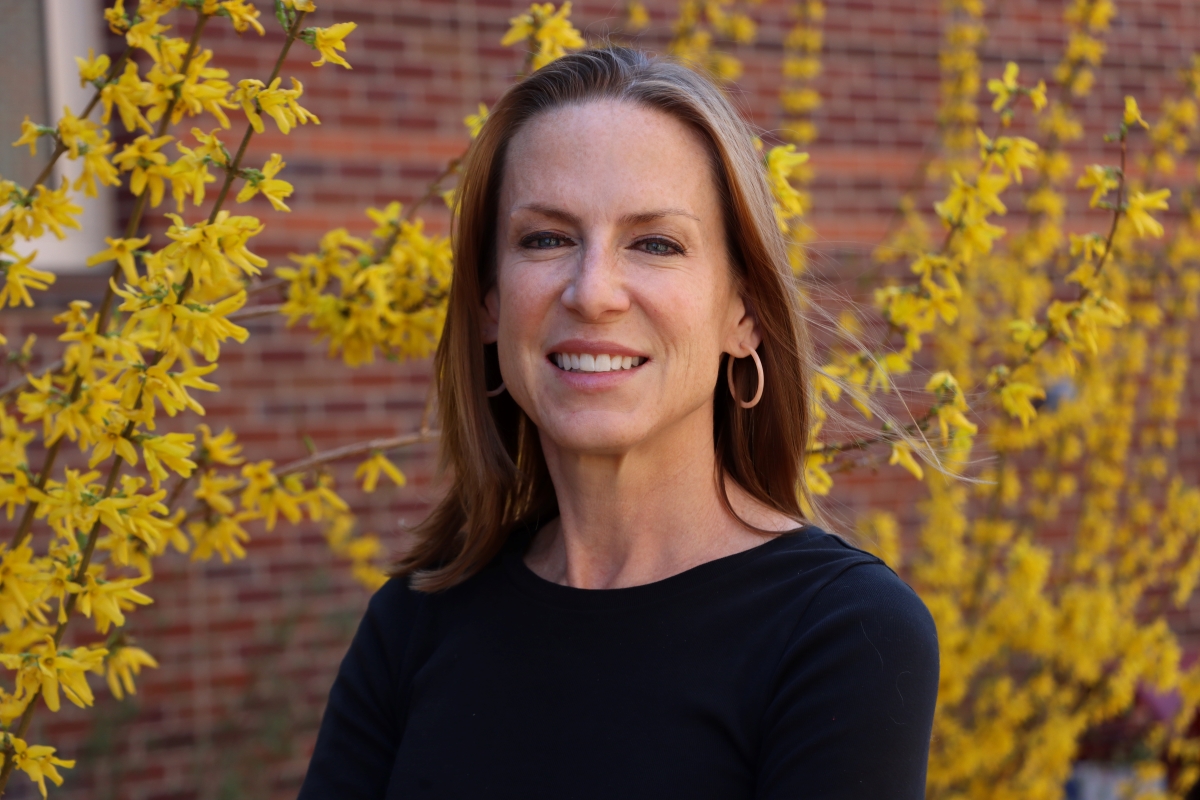
Kateri McRae, professor and chair of the Department of Psychology in the College of Arts, Humanities & Social Sciences, has received the 2026 Inaugural Service Award from the Social and Affective Neuroscience Society (SANS).
For McRae, this recognition is especially meaningful because it’s from SANS. She noted that many academics have a “home” conference or annual meeting where they feel most connected to both their work and their scholarly community.
“SANS is that ‘home’ for me, so for my contributions to that society to be appreciated and recognized feels incredibly special and aligned in a pleasant way,” she said.
This award celebrates those whose leadership, mentorship, and advocacy have advanced research, broadened participation, and enhanced the infrastructure and visibility of the field of psychology.
Worthy of Recognition
McRae was recognized by SANS for several reasons, including her diligent curiosity. She has spent her career characterizing neural systems that support cognition and emotion, and “is endlessly interested in the tension between the idea that emotions are incredibly personal and subjective, but also that there are ways to study them objectively,” she said.
The core of McRae’s work is studying the coping mechanism of shifting one's thinking about something to help shift one's feelings about that thing. “It's an especially effective strategy that many use to help keep emotions manageable when the world is uncertain or out of one’s control, which a lot of people might feel right now,” McRae said.
In addition to her research and teaching, McRae serves in a 4D role at DU as the “Senior Scholar of Resilience.” In this capacity, she collaborates with fellow faculty members and staff on the 4D team to bring resilience-based programming to biomedical trainees nationwide. This spring, more than 1,000 people nationwide signed up to learn how resilience practices could help them during a training period that is often stressful and intense. Her expertise in emotion regulation closely aligns with these efforts, creating expanded opportunities for student engagement and learning on campus.
Balance and Inspiration
Balancing research, teaching, and service has been a deliberate process for McRae, shaped by careful boundary-setting and timing.
“Service has enhanced my ability to do high-quality social and affective neuroscience research and be an effective teacher,” she said. “I’ve tried to maintain boundaries and make thoughtful choices, not always declining opportunities, but sometimes delaying large service roles until they fit within my work and family life.”
McRae also draws inspiration from her colleagues at the University of Denver.
“DU, and especially the psychology department, has shown me time and again that you don’t have to choose between doing good work and being a good person,” she said. “I’ve seen so many inspiring examples of people who do both.”
Congratulations to McRae on this outstanding achievement for her contributions to psychology and the liberal arts; her work is a testament to dedication and excellence in research.